Thousand Pillar Templeవేయ్యి స్తంభాల గుడి
The Thousand Pillar Temple at Hanamakonda is the triple-shrined temple that Rudra Deva consecrated in 1163. Its three shrines are dedicated to Shiva, Vishnu and Surya. The 1900 survey called it one of the finest monuments in the Nizam’s dominions.
- Period
- Kakatiya, from 1163 CE
- Date
- 1163 CE (Saka 1084)
- Commissioned by
- Rudra Deva
- Materials
- Black stone and granite, with reddish-white stone slabs inside the shrines
- Location
- 18.0038° N, 79.5747° E
Source of the position: Wikidata Q7797068
- Condition
- Standing and conserved. The Kalyana Mandapa was dismantled for reconstruction.
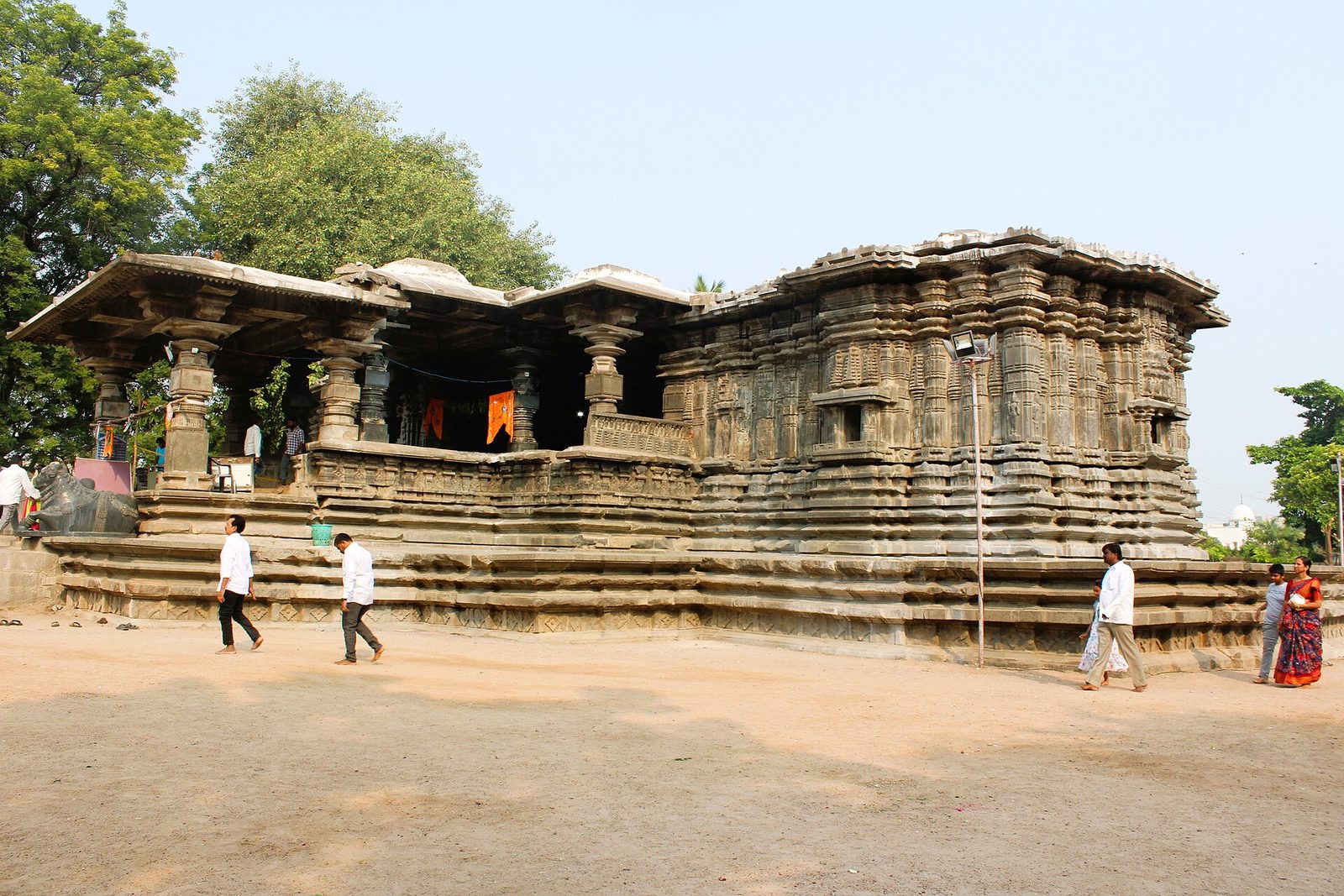
Rudradeva’s trikutalaya of 1163 CE. A shrine block with moulded dark stone walls stands at the right, and an open pillared porch stands at the left. Both rest on the stepped platform.
.jpg)
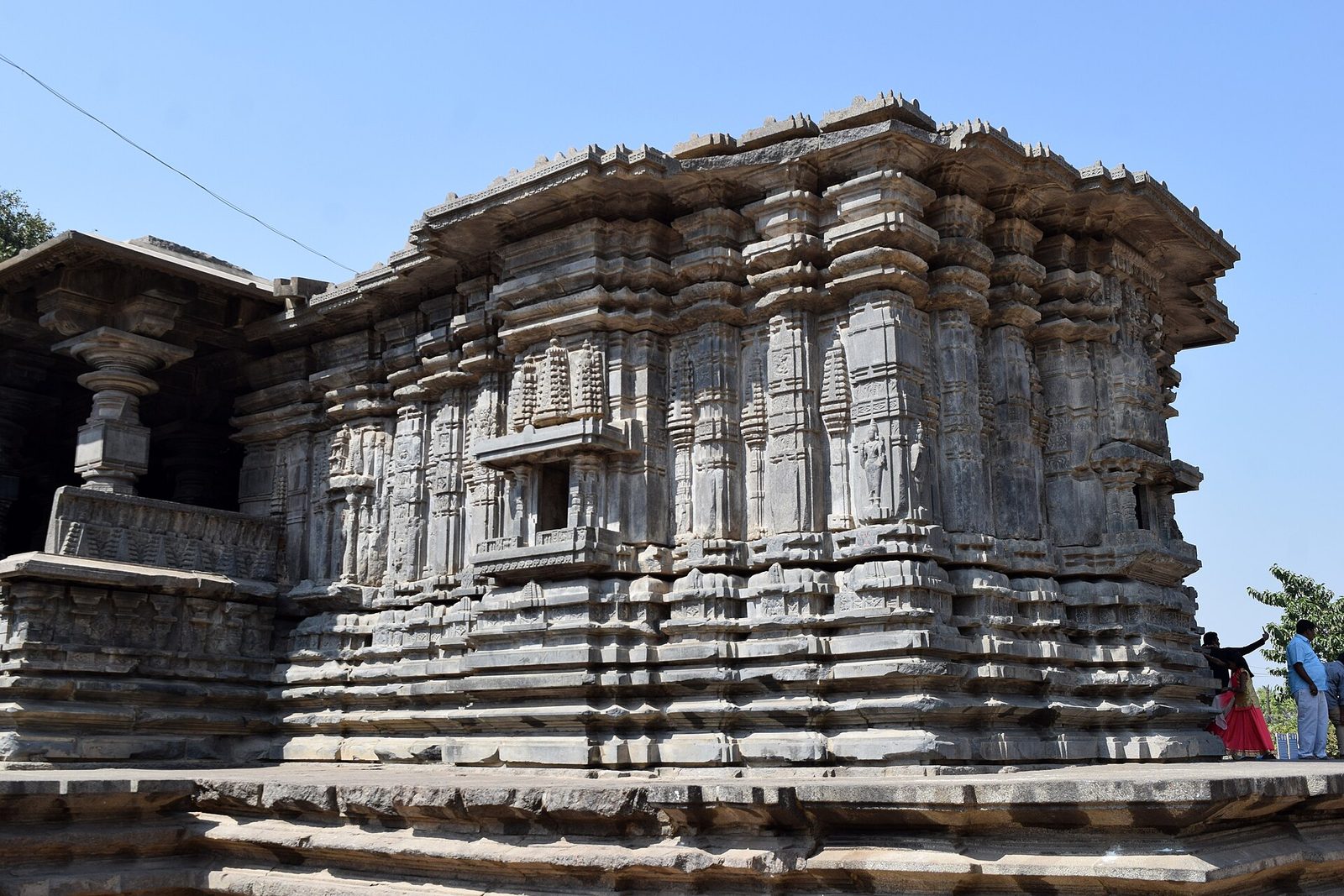
One of the shrine blocks. The wall is broken into closely set pilasters and niches above a stack of horizontal mouldings.

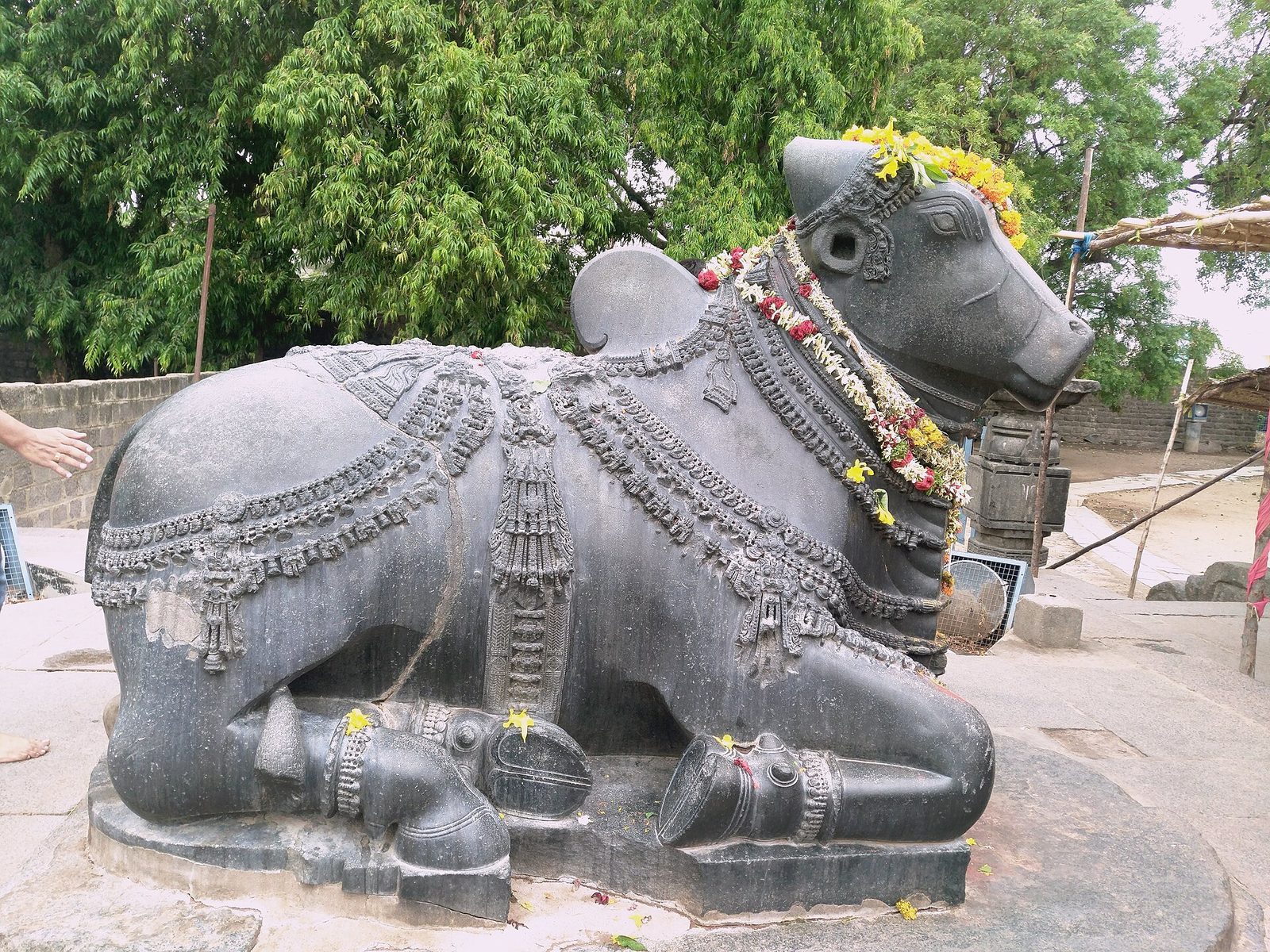
The monolithic Nandi in black stone, its neck and body carved with chains of bells. The Nandi pavilion stood until within a decade of the 1900 survey, by which time it was already a heap of ruins.

Detail
- The Anumakonda inscription in the temple is dated Saka 1084, which is 19 January 1163. The inscription records that Rudra Deva consecrated the god Rudresvara and endowed the gods Vasudeva and Surya.Epigraphia Telanganica 2023
- The three shrines face different ways. Rudresvara (Shiva) is on the west, Vasudeva (Vishnu) on the north and Surya on the east.Rama Rao 1966
- The temple stands on a double platform with a star-shaped plan. The temple faces south.Rama Rao 1966
- The temple is built of black stone and granite. The inner walls of the shrines are faced with slabs of reddish-white stone.Gopalakrishna Murthy 1964
- Gopalakrishna Murthy notes that the wall looks as if a thousand pillars made it. Parabrahma Sastry records about three hundred surviving pillars, from an original thousand.Gopalakrishna Murthy 1964Parabrahma Sastry 1978
- The doorway carries a dancing Siva Nataraja among makara creepers.Rama Rao 1966
- Pierced stone slabs serve as windows.Fergusson 1876
- A large black stone Nandi faces the shrine.Rama Rao 1966
- India proposed this temple for the World Heritage List in 2014 with Ramappa and the Swayambhu temple. The final nomination dropped it because houses had encroached on its surroundings.UNESCO dossier 2017
- Parabrahma Sastry notes that none of the three shrines now has a tower. He suggests that the finely polished pillars and doorways of the shrines belong to a later rebuilding, probably under Ganapati Deva.Parabrahma Sastry 1978Parabrahma Sastry 1975 (thesis)
- The ascetic Achintendra, son of Ramesvara Dikshita and pupil of Advayamrita, composed the inscription. The inscription grants the village of Maddicheruvula for the worship of the three gods.Epigraphia Telanganica 2023Parabrahma Sastry 1981 (Telugu)
- A compound of low walls built of large stone blocks encloses the temple. The old main entrance is on the east, beside the inscribed granite pillar. A large well with steps stands in the north-east corner of the compound.Rama Rao 1966
- M. Rama Rao cites an inscription of one Gosagi Isvaradeva. It records that he installed a four-faced god, Umamahesvara and 1,000 lingas in the Rudresvara temple.Rama Rao 1966Sreenivasachar 1942
Inscriptions on this monument
These images show the inscriptions themselves. The ink impressions come from the published editions, and the photographs show the stones today. How to read a Kakatiya inscription
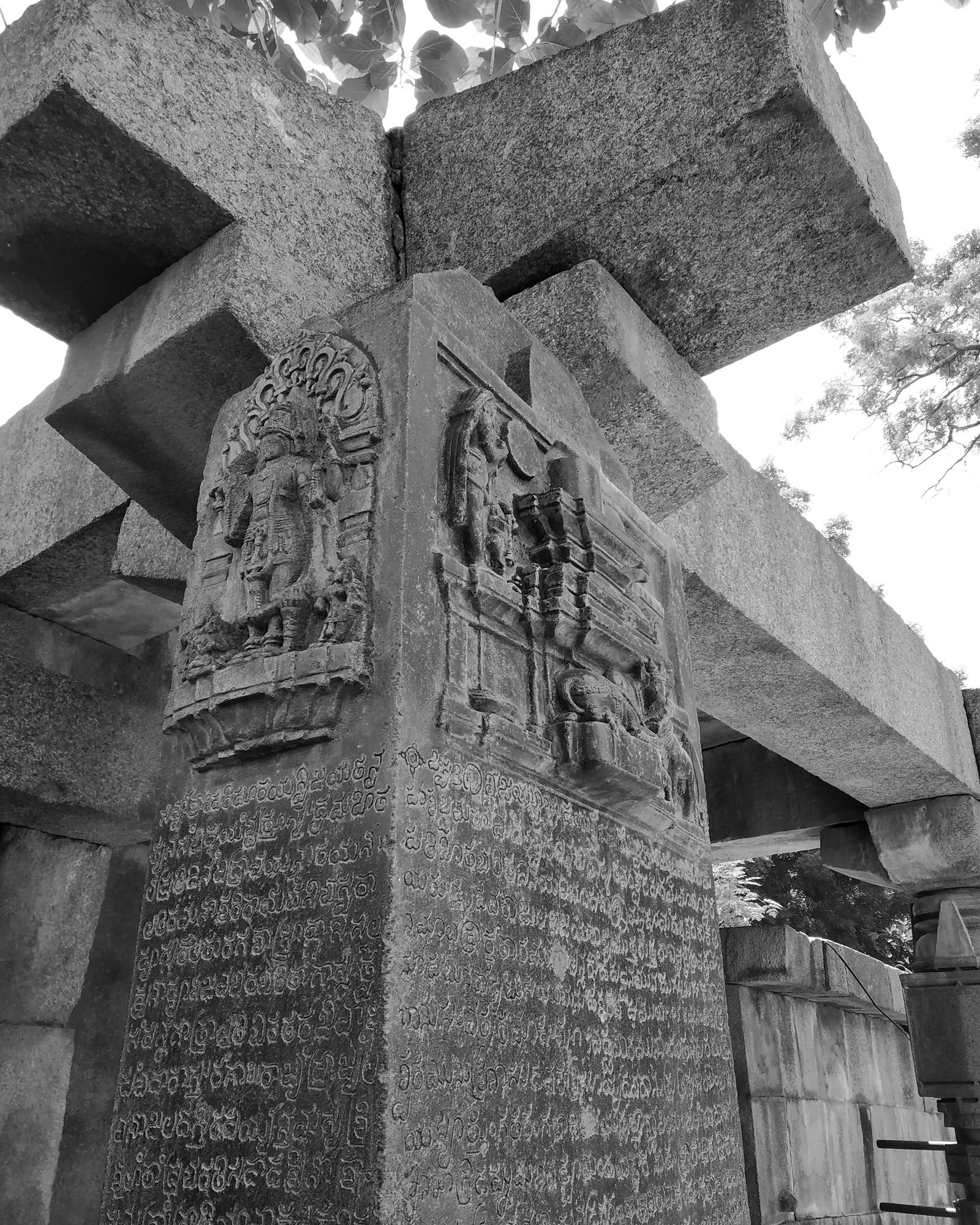
Photograph of the stone
The inscription of the Kakatiya king Rudradeva stands at the Thousand Pillar Temple in Hanamkonda. The record is dated Saka 1084, which is 19 January 1163. Carved panels of gods sit above the text on each face.
Photo: Torchtelangana, via Wikimedia Commons · CC BY-SA 4.0 · This record in the database

Historical photographs
These photographs were published a century or more ago. They show the monument as it stood before later repair and restoration.
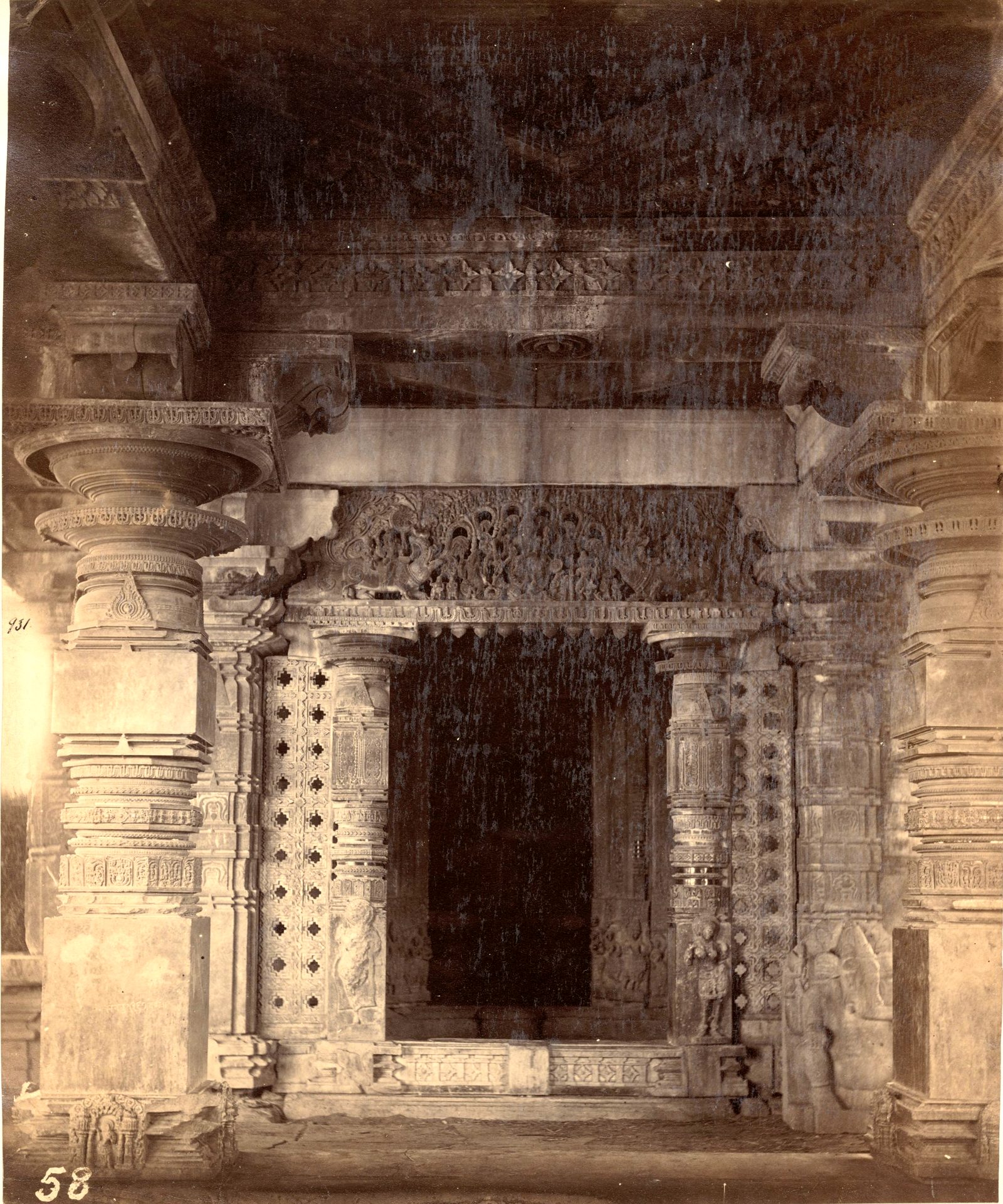
Photographed ca. 1850-1886
This photograph shows a shrine doorway in the Thousand Pillar Temple at Hanamkonda. Pierced stone screens stand on each side of the doorway. The photograph dates from about 1850 to 1886.
Photo: unknown photographer, James Fergusson collection, Boston Public Library, via Digital Commonwealth · Public domain

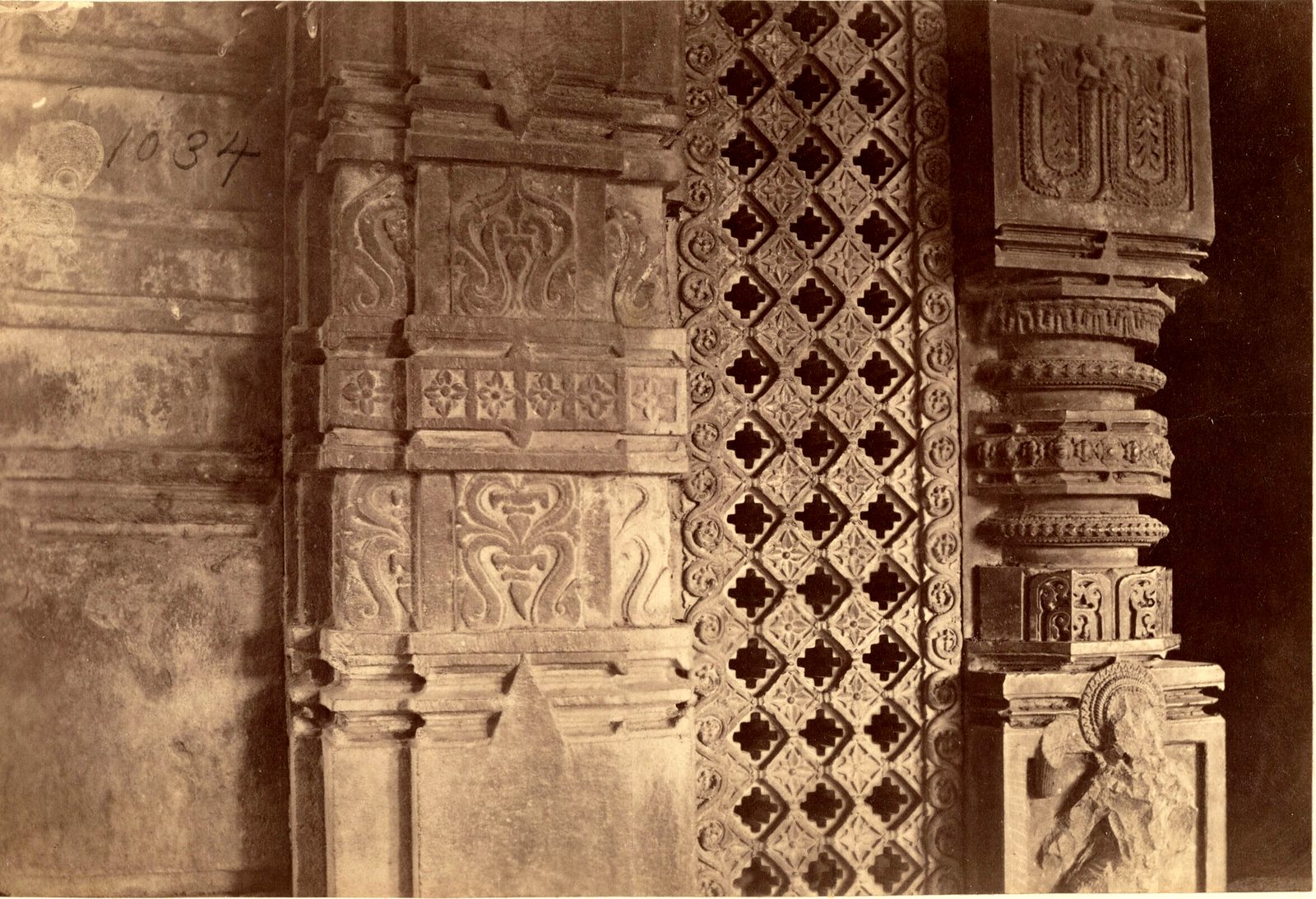
Photographed ca. 1850-1886
This close view shows a doorway of the Thousand Pillar Temple at Hanamkonda. A pierced stone screen stands between a carved jamb and a carved pillar. The photograph dates from about 1850 to 1886.
Photo: unknown photographer, James Fergusson collection, Boston Public Library, via Digital Commonwealth · Public domain

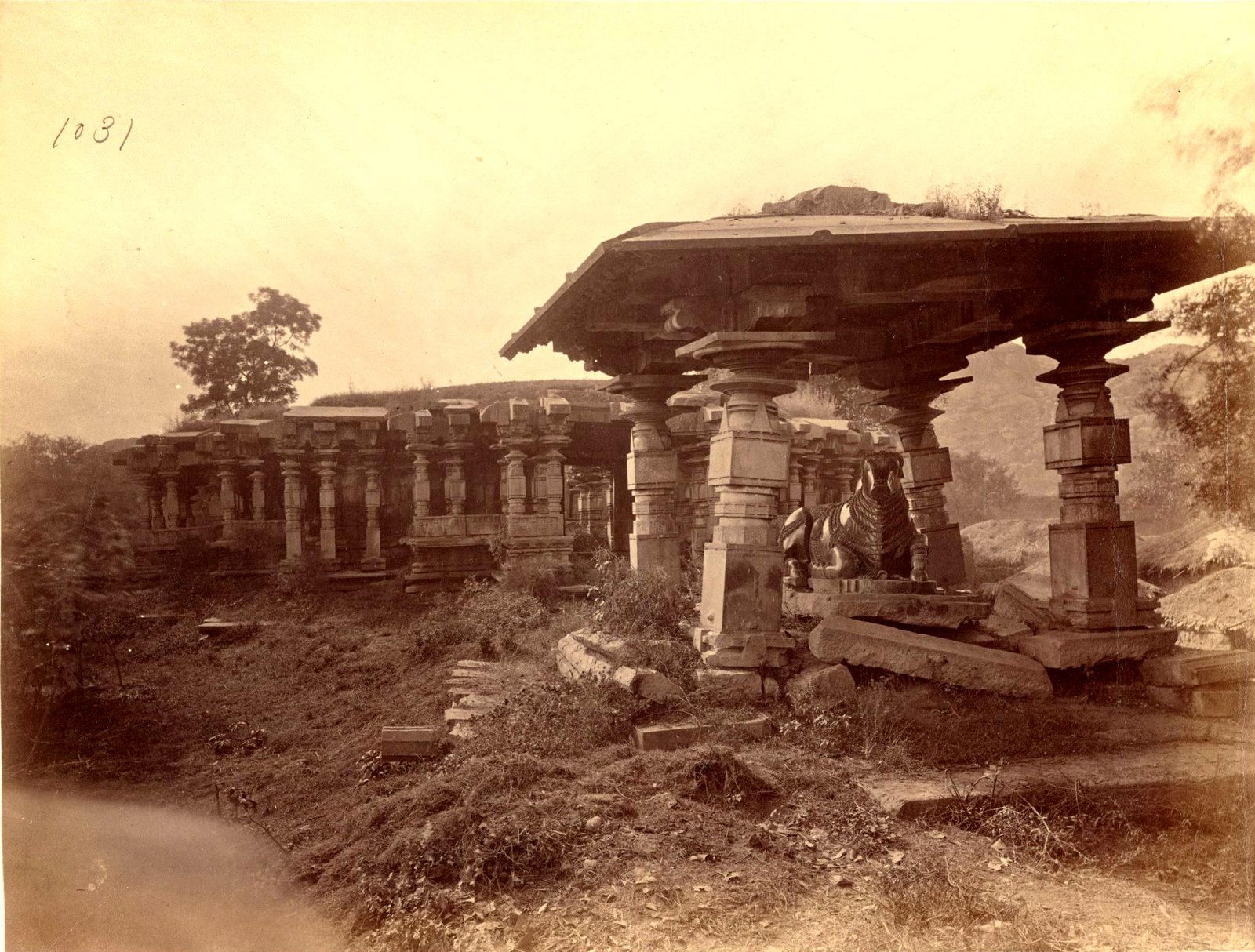
Photographed ca. 1850-1886
The Boston Public Library catalogue names this the Nandi pavilion of the Thousand Pillar Temple. Rubble and loose stones lie on the ground in front of it. The photograph dates from about 1850 to 1886.
Photo: unknown photographer, James Fergusson collection, Boston Public Library, via Digital Commonwealth · Public domain

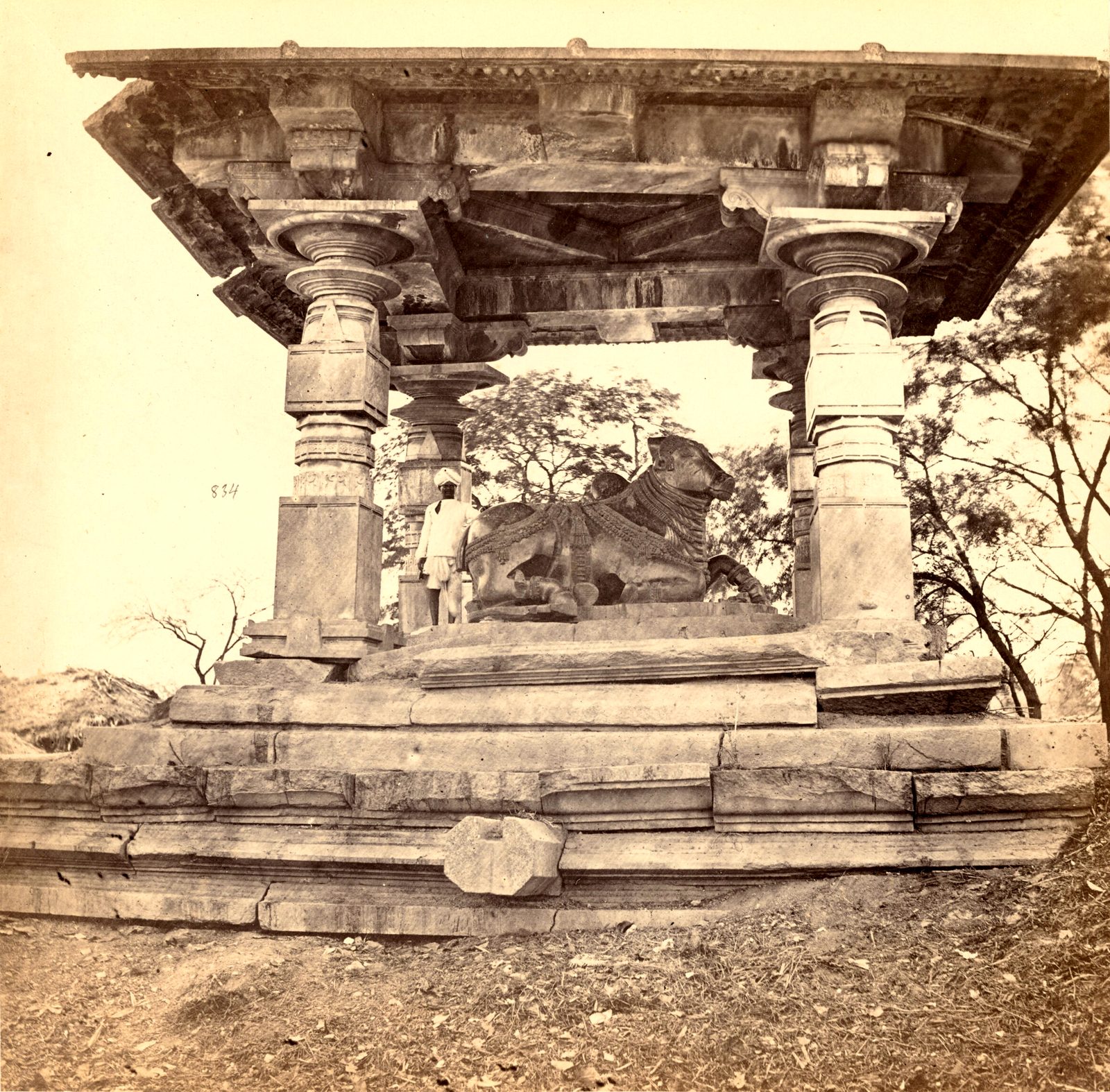
Photographed ca. 1850-1886
A stone Nandi bull lies under a pillared porch at the Thousand Pillar Temple. The porch stands on a stepped stone platform with some loose stones. The photograph dates from about 1850 to 1886.
Photo: unknown photographer, James Fergusson collection, Boston Public Library, via Digital Commonwealth · Public domain

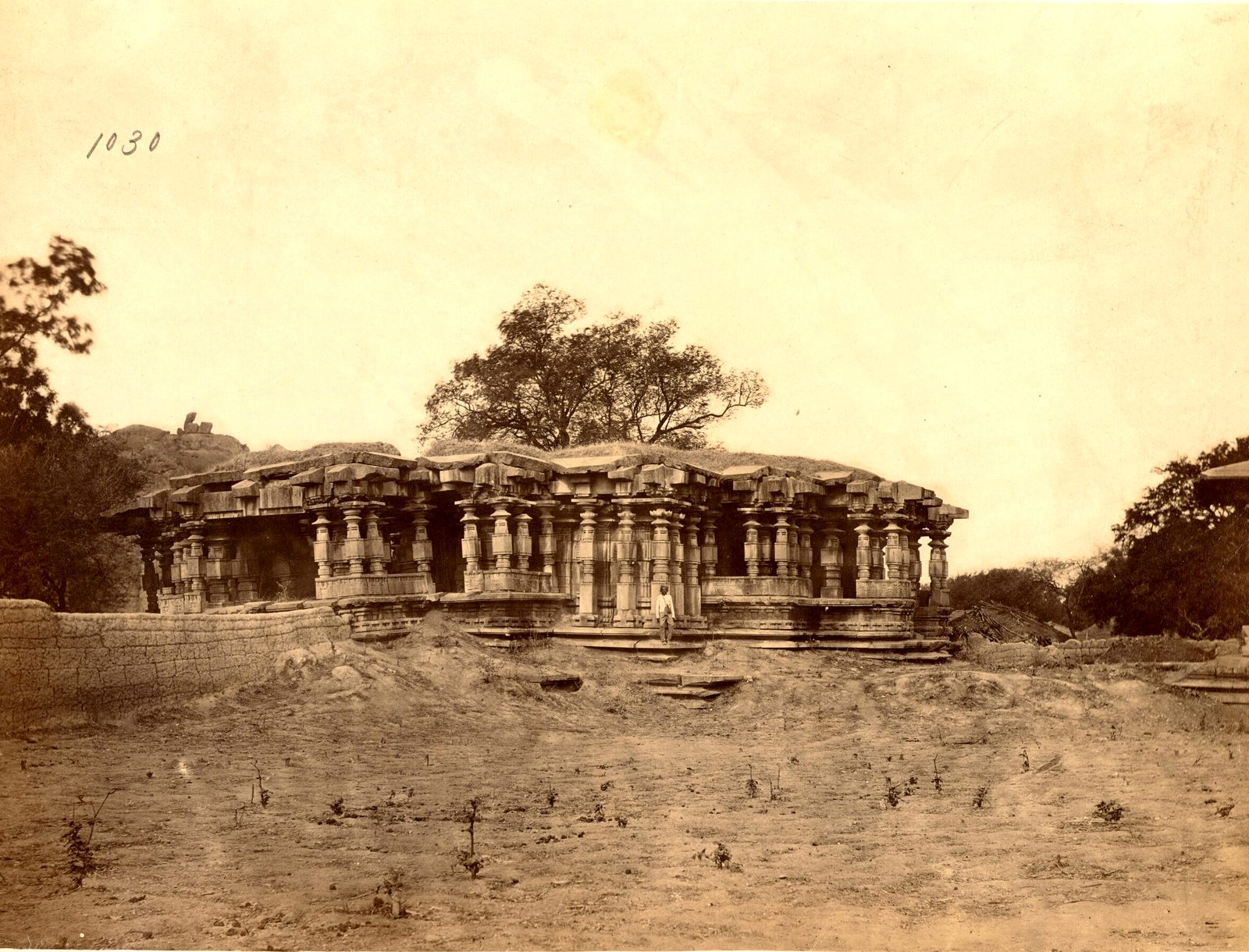
Photographed ca. 1850-1886
This view of the Thousand Pillar Temple shows a large tree growing from its roof. Bare, rough ground lies in front of the temple. The photograph dates from about 1850 to 1886.
Photo: unknown photographer, James Fergusson collection, Boston Public Library, via Digital Commonwealth · Public domain

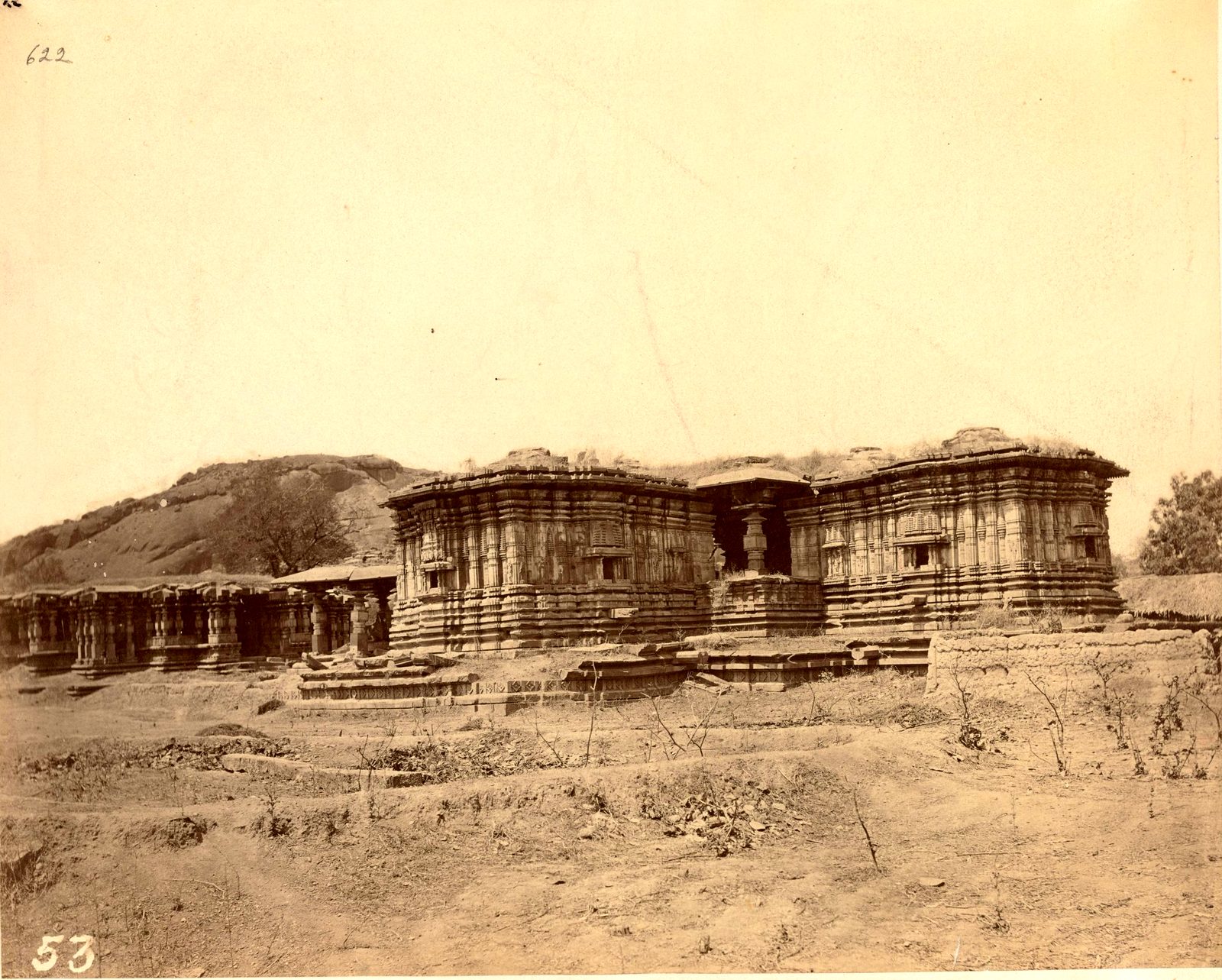
Photographed ca. 1850-1886
This photograph shows the shrines of the Thousand Pillar Temple below the Hanamkonda hill. A long pillared hall extends to the left. The photograph dates from about 1850 to 1886.
Photo: unknown photographer, James Fergusson collection, Boston Public Library, via Digital Commonwealth · Public domain

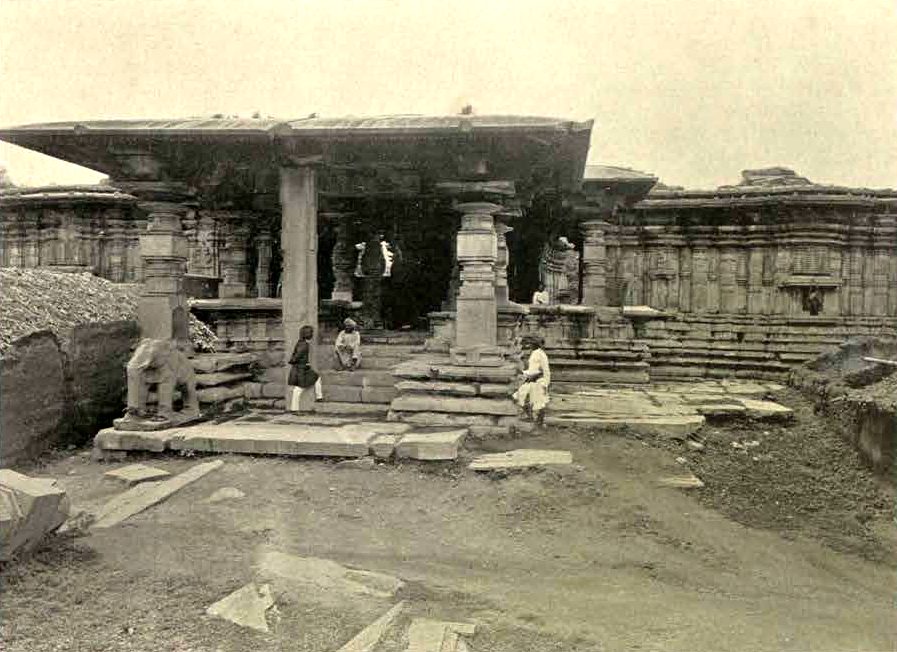
Photographed before 1898
This photograph shows the entrance porch of the Thousand Pillar Temple at Hanamkonda before 1898. A stone elephant stands beside the steps. Loose stone slabs lie on the ground in front.
Photo: unknown photographer, Glimpses of the Nizam's Dominions (A. Claude Campbell), 1898 · Public domain
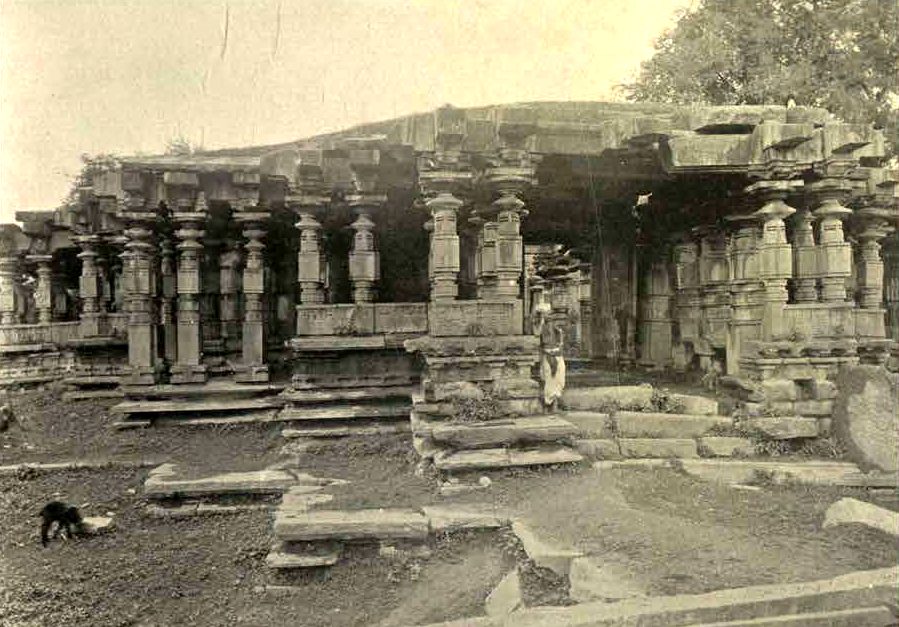
Photographed before 1898
Campbell's book calls this building the detached hall of the Thousand Pillar Temple. The hall stands on its carved pillars, but its roof line sags. Loose stones lie in front of the hall in this photograph from before 1898.
Photo: unknown photographer, Glimpses of the Nizam's Dominions (A. Claude Campbell), 1898 · Public domain
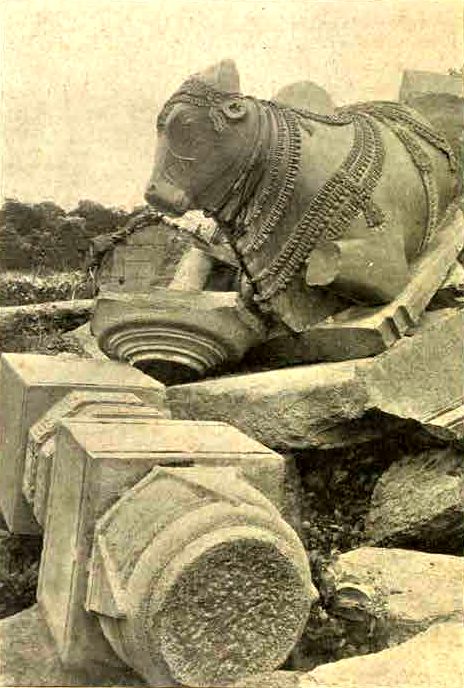
Photographed before 1898
Campbell's book calls this scene the fallen pavilion of the Thousand Pillar Temple. A carved stone Nandi bull lies tilted among fallen pillar parts. The photograph was published in 1898.
Photo: unknown photographer, Glimpses of the Nizam's Dominions (A. Claude Campbell), 1898 · Public domain
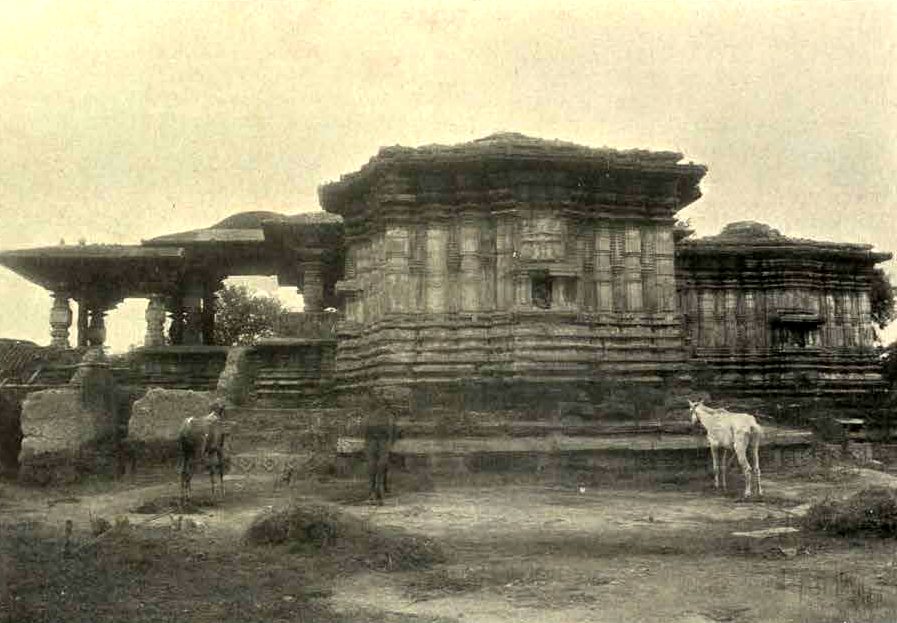
Photographed before 1898
This photograph shows the shrines of the Thousand Pillar Temple at Hanamkonda before 1898. Earth and rubble are heaped against the base of the temple. Horses graze on the open ground in front.
Photo: unknown photographer, Glimpses of the Nizam's Dominions (A. Claude Campbell), 1898 · Public domain
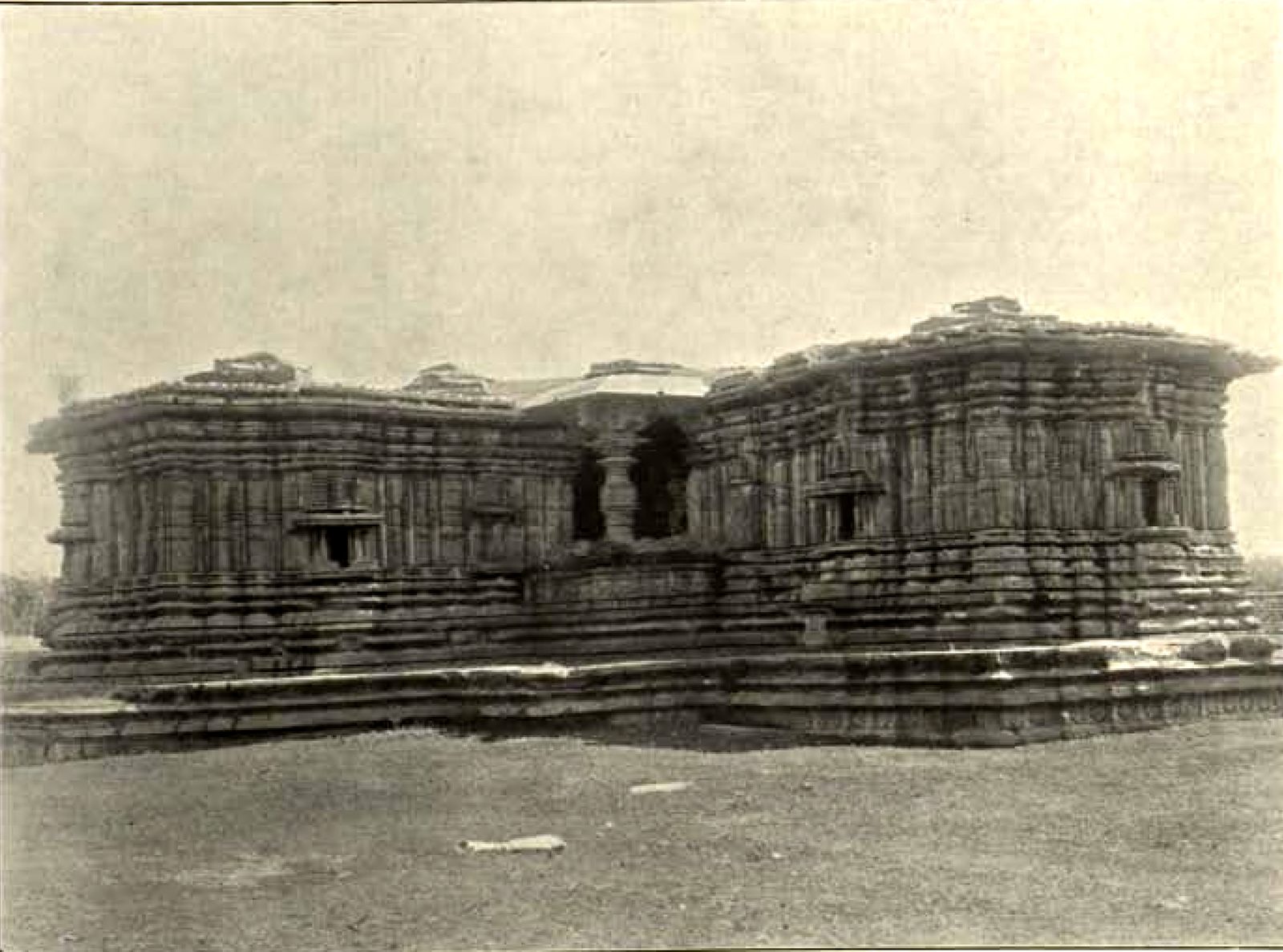
Photographed 1915-16
The Hyderabad Archaeological Department photographed the Thousand Pillar Temple in 1915-16. The department's report for 1921-24 states that its repairs to this temple were complete. The photograph was published in 1917.
Photo: Hyderabad Archaeological Department, Annual Report of the Archaeological Department of H.H. the Nizam's Dominions for 1915-16, 1917 · Public domain
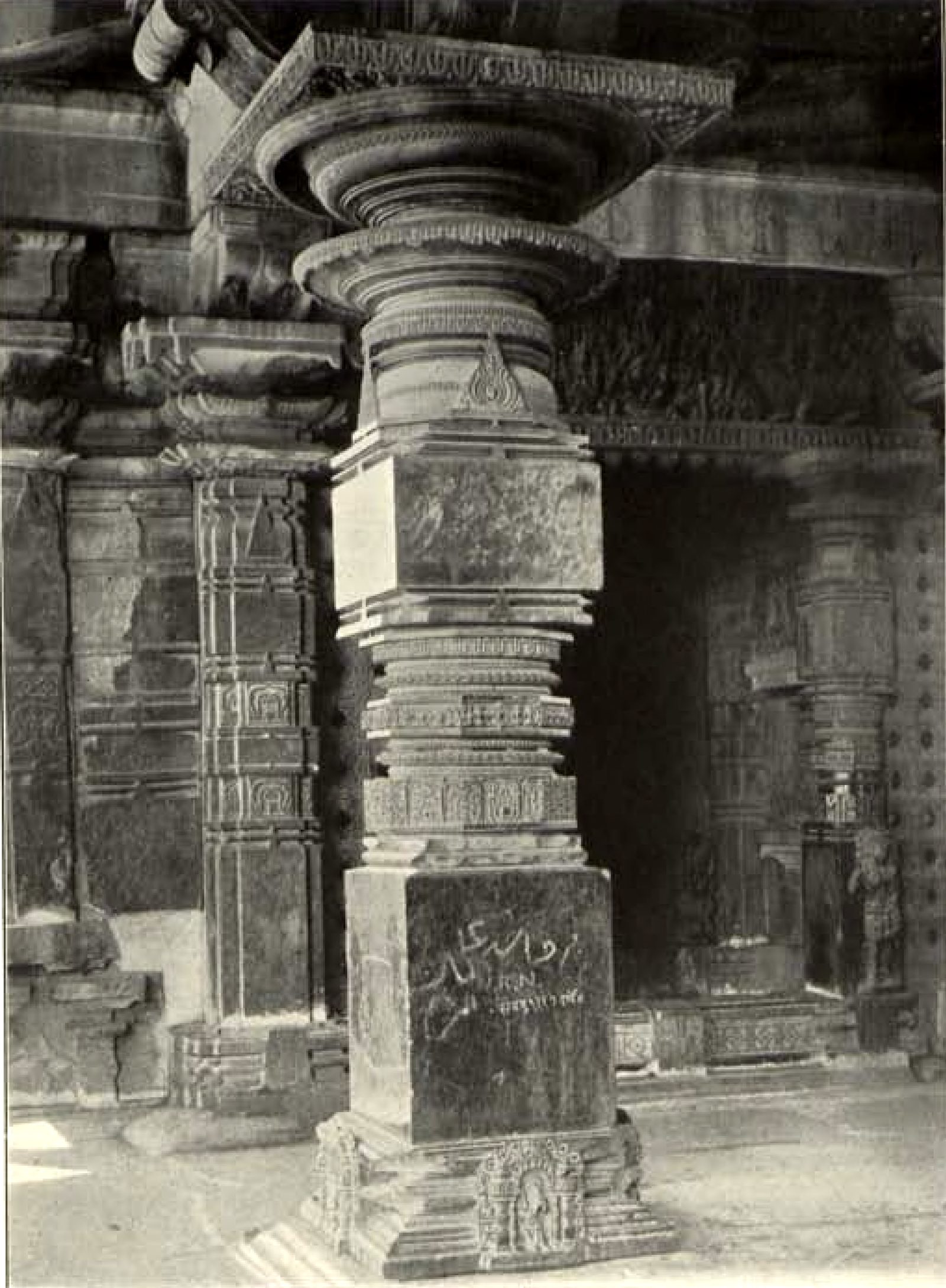
Photographed 1915-16
The Hyderabad Archaeological Department photographed this pillar of the Thousand Pillar Temple in 1915-16. Someone has scratched writing in two scripts on the pillar base. The photograph was published in 1917.
Photo: Hyderabad Archaeological Department, Annual Report of the Archaeological Department of H.H. the Nizam's Dominions for 1915-16, 1917 · Public domain
Also recorded as
- Rudreswara
- Rudreshwara
- Veysthambala Gudi
- Veyistambhalagudi
- Thousand Pillared Temple
- Hanumkonda temple
- Annamakonda
- Hanamakonda
- Hanumakonda
- HanumkondA