Padmakshi Temple
The Padmakshi Temple is a small hilltop shrine at Hanamakonda. It was built in 1117 as a Jain temple, the Kadalalaya Basadi, and was later used for Hindu worship of the goddess Padmakshi. Its rock-cut Jain reliefs may be older than the temple.
- Period
- The rock reliefs are possibly Rashtrakuta. The Jain basadi dates from 1117 CE, and Hindu worship came later
- Date
- 1117 CE (Chalukya-Vikrama year 42)
- Commissioned by
- Mailama, wife of Pergade Beta, minister of Prola II
- Materials
- Stone, with reliefs on natural boulders
- Location
- 17.9979° N, 79.5670° E
Source of the position: Wikidata Q19894997
- Condition
- In worship as a Hindu shrine.
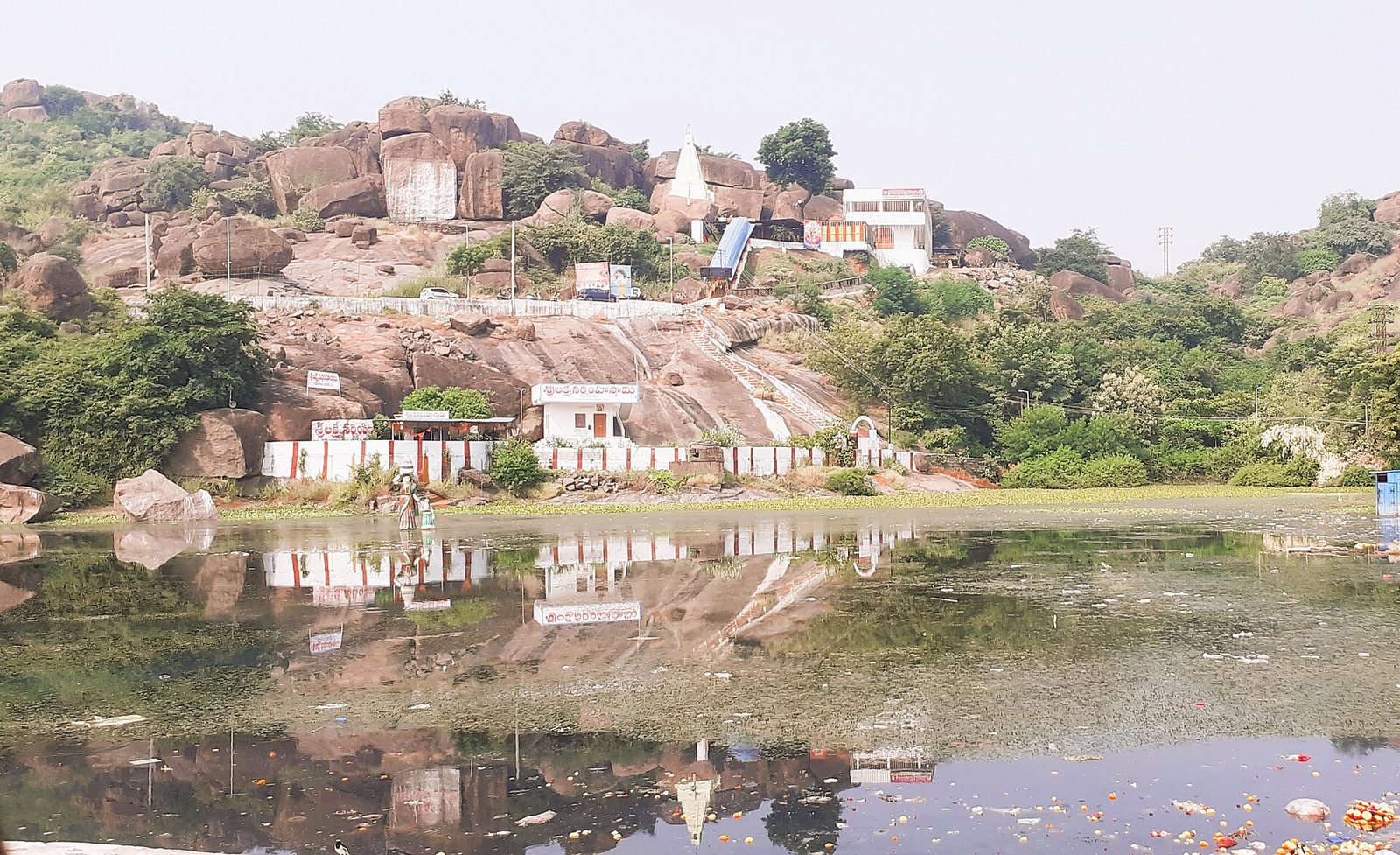
The Padmakshi temple stands near the top of a rocky granite hill at Hanamakonda. Its narrow pyramidal tower is painted white. A pond lies at the foot of the hill.
.jpg)
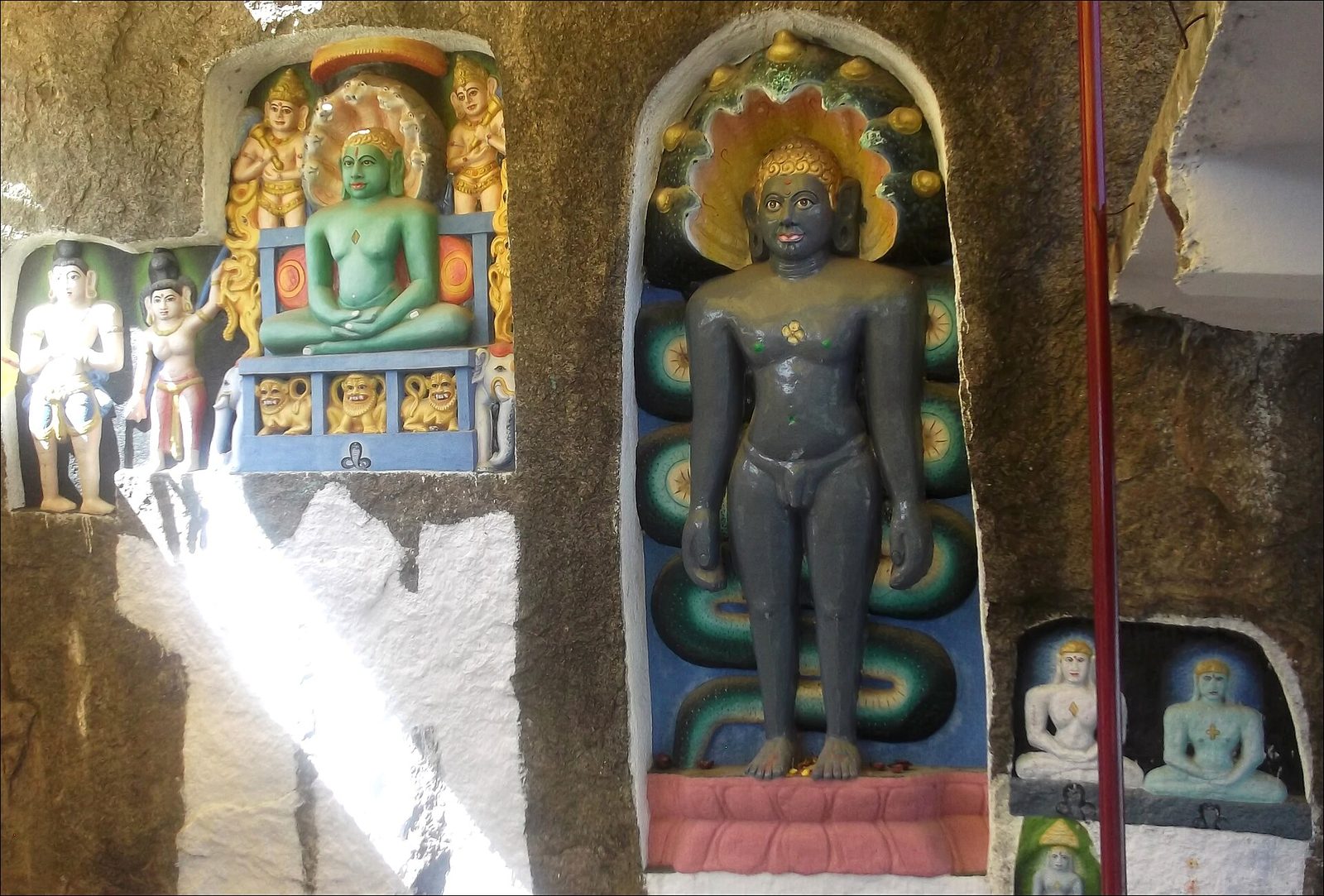
Jain sculptures are carved in niches in the rock at the Padmakshi temple. The tall standing sculpture stands under a hood of snake heads. All the sculptures are now painted in bright colours.
Photo: R.Karthika Raju, via Wikimedia Commons · CC BY-SA 4.0

Detail
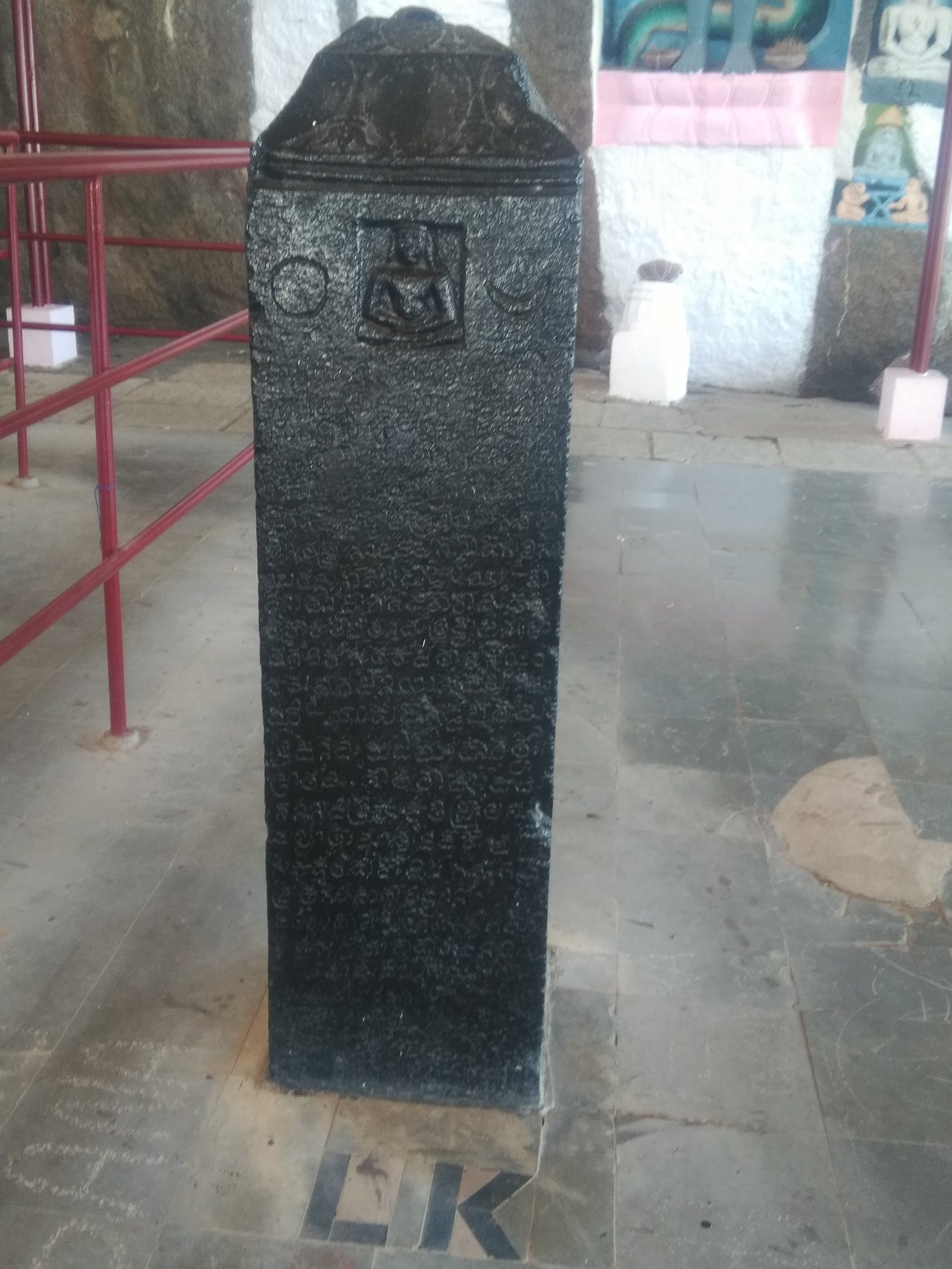
- A Kannada inscription on a granite pillar before the shrine is dated Monday, 24 December 1117. It records that Mailama, wife of Pergade Beta, built the Kadalalaya Basadi on the Anmakonda hill and endowed it with wetland. Pergade Beta was a counsellor of Prola II, then a Western Chalukya feudatory.ASI 1900Epigraphia Indica IXEpigraphia Telanganica 2023
- The shrine has a garbhagriha and a small mandapa under a narrow, stepped, pyramidal vimana. Narrow steps lead up to it from a pond at the foot of the hill, the Padmakshi-gundam.Rama Rao 1966
- Reliefs on the rock inside show a Tirthankara with his yaksha and yakshi. The yakshi is now worshipped as Padmakshi. Gopalakrishna Murthy identifies the three sculptures as Parsvanatha, Dharanendra and Padmavati.Rama Rao 1966Gopalakrishna Murthy 1964
- Gopalakrishna Murthy dates these reliefs and two unfinished caves west of the temple to Rashtrakuta times, on grounds of style. He credits Mailama with the sikhara, the mandapa and further reliefs. He assigns a later Chauvisa votive sculpture to the reign of Pratapa Rudra.Gopalakrishna Murthy 1964
- Parabrahma Sastry records that Gangadhara, a minister of Rudra Deva, worked on a Jain basadi on the Padmakshi hill. In one passage he calls this a new building, and in another a renovation.Parabrahma Sastry 1978Parabrahma Sastry 1975 (thesis)
- Krishna Sastri noted that nobody knows how or when the temple passed from Jains to Brahmins. The Brahmins worship the goddess as Padmakshi, a form of Durga.Epigraphia Telanganica 2023
- The inscription of 1117 also records a gift of land to the basadi by Medaraja, the Jain chief of Polavasa.Parabrahma Sastry 1975 (thesis)Parabrahma Sastry 1978
- Near the inscribed pillar, a man and a woman are carved on the rock beside a Parsvanatha. M. Rama Rao and Gopalakrishna Murthy report the view that the pair are Mailama and her husband Pergade Beta.Rama Rao 1966Gopalakrishna Murthy 1964
Inscriptions on this monument
These images show the inscriptions themselves. The ink impressions come from the published editions, and the photographs show the stones today. How to read a Kakatiya inscription
Estampage (ink impression)
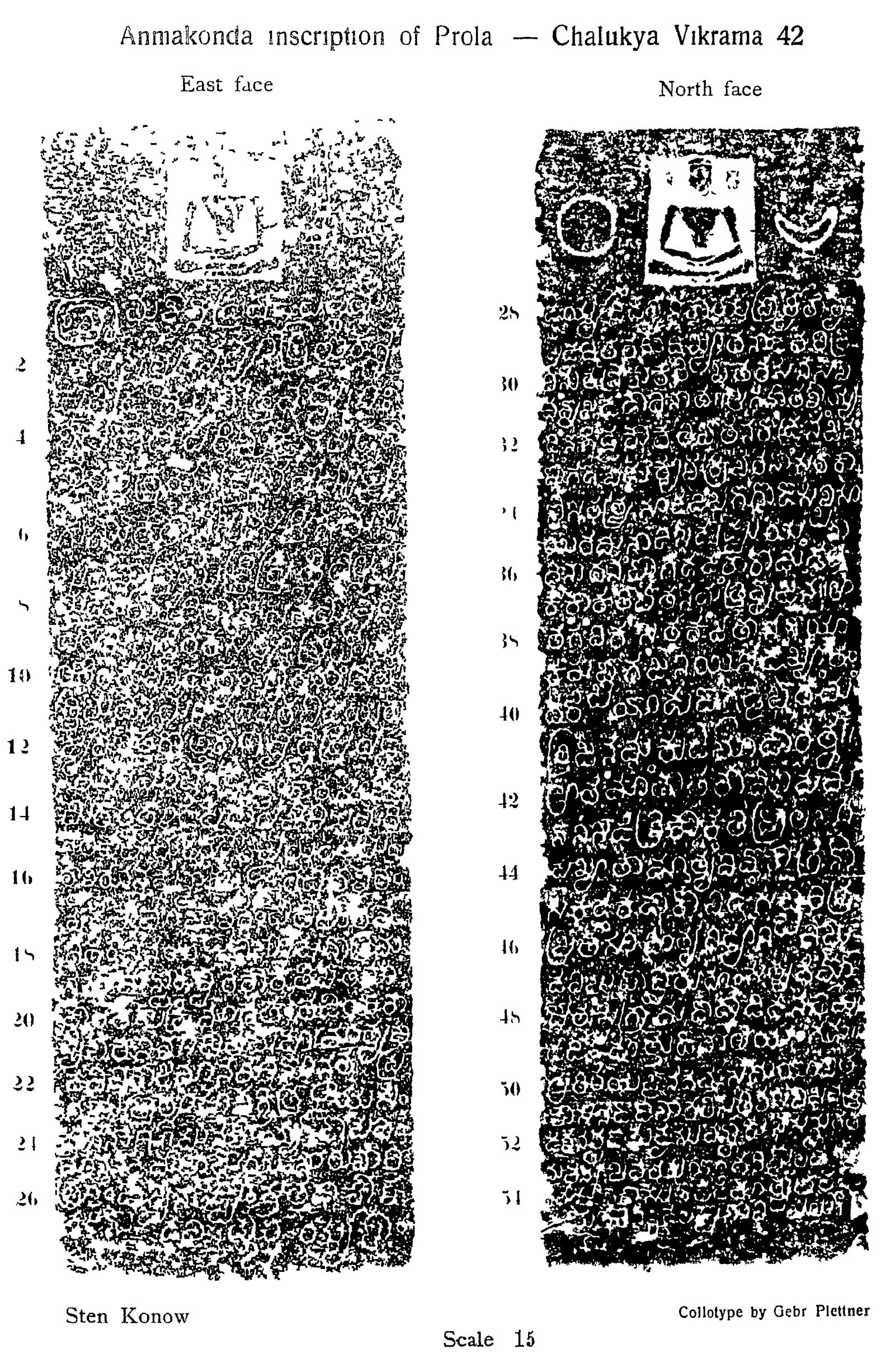
This plate shows the east and north faces of the inscribed pillar in front of the Padmakshi temple at Hanamkonda. A seated Jaina ascetic is carved at the top of each face, and the north face also shows the sun and the moon. H. Krishna Sastri describes the letters as bold and clear Kanarese characters of the twelfth century.
Plate published in H. Krishna Sastri, "Anmakonda inscription of Prola: the Chalukya-Vikrama year 42", Epigraphia Indica Vol. IX (1907-08), pp. 256-263. Plate: "Anmakonda inscription of Prola, Chalukya Vikrama 42. East face, North face", signed Sten Konow, collotype by Gebr. Plettner. · Public domain · This record in the database
Photograph of the stone
The north face of the pillar at the Padmakshi temple shows a seated Jaina teacher between the sun and the moon. Mailama, the wife of a minister of Prola II, set up this Kannada record in 1117.
Photo: Pakideadithya, via Wikimedia Commons · CC BY-SA 4.0 · This record in the database

Also recorded as
- Padmakshi
- Padmaksi
- Padmakshi hill
- Kadalalaya Basadi
- Padmakshamma
- Padmaksi-gundam
- Hanumadgiri