Vemulavada Temples
Vemulavada was the capital of the Chalukyas of Vemulavada, who ruled before the Kakatiyas. Their inscriptions name its temples in the 10th century, and Western Chalukya records follow until 1108. No Kakatiya record has been found there.
- Period
- Before the Kakatiyas: the Chalukyas of Vemulavada (10th century) and the Western Chalukyas (11th and 12th centuries)
- Location
- 18.4675° N, 78.8712° E
Source of the position: OpenStreetMap way/1024346478
- Condition
- A living temple. The Raja Rajeshwara temple is in worship and under renovation.
No copyright-free photograph of this site is available yet. Offer a photograph you took
Detail
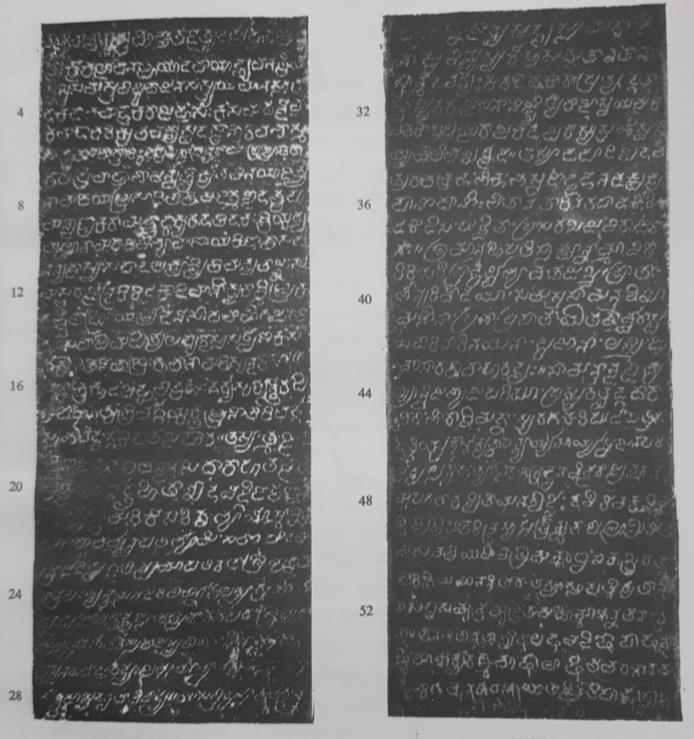
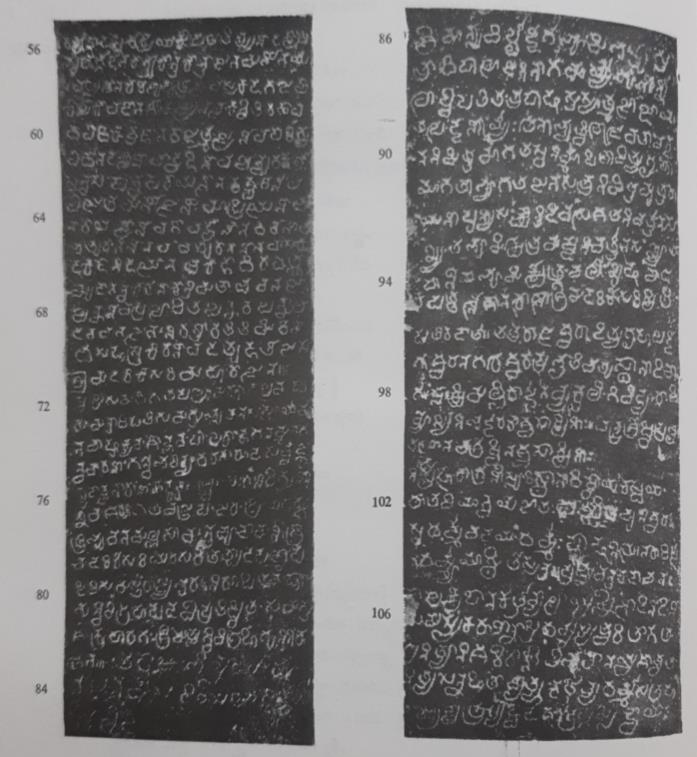
- A pillar inscription of Arikesari II, who ruled about 930 to 955, names the four temples of Vemulavada: Rajesvara, a temple of Aditya, the Sun, Baddegesvara and Nagaresvara. The Sun temple was built by Peddana, an officer of the king.Epigraphia Telanganica 2023Yazdani 1960
- Epigraphia Telanganica identifies the Bhimeshwara temple as the old Baddegesvara. The Census volume of 1964 says that it was the centre of worship until the Raja Rajeshwara temple was built.Epigraphia Telanganica 2023Census 1961, Fairs and Festivals: Karimnagar
- The sources place the pillar differently. Epigraphia Telanganica places it in the Rajeshwara temple, while N. Venkataramanayya, as summarised there, places it to the left of the sanctum of the Bhimeshwara temple.Epigraphia Telanganica 2023
- A king named Baddega built a Jain temple, the Subhadhama Jinalaya, for the Jain scholar Somadeva. Epigraphia Telanganica places this Baddega in the 9th century. The Early History of the Deccan makes him the son of Arikesari II and the father of Arikesari III, who later endowed the same temple. The site of this Jain temple has not been identified.Epigraphia Telanganica 2023Yazdani 1960
- The Kannada poet Pampa was patronised by Arikesari II, and Somadeva finished his Yasastilaka in 959. According to an inscription of Pampa’s brother, Pampa received the village of Dharmapuram from Arikesari for his epic poem.Yazdani 1960Epigraphia Telanganica 2023
- Parabrahma Sastry writes that Arikesari II moved the capital from Podana, the present Bodhan, to Vemulavada. The Early History of the Deccan suggests that Vemulavada was already the capital under Arikesari I.Parabrahma Sastry (ed.) 1974Yazdani 1960
- Western Chalukya records continue the story. A record of 1033 gives a gift to the god Rajesvara and stands near the Kedareshwara temple. In 1083 the chief Rajaditya, ruling from Lembulavada, installed the god Rajadityesvara and built a lofty temple. Two records of 1106 and 1108 stand near the Bhimeshwara temple, the second of them by Jagaddeva of the Paramara line.Epigraphia Telanganica 2023
- The builder of the present Raja Rajeshwara temple is disputed. Parabrahma Sastry notes the common belief that Rajaditya built it in 1083, but he doubts it, because the inscription of Arikesari II already names a Rajesvara temple. The Census volume of 1964 credits Narasimha I, called Rajaditya, of the Chalukyas of Vemulavada.Parabrahma Sastry (ed.) 1974Census 1961, Fairs and Festivals: Karimnagar
- According to the temple tradition, a king named Narendra was cured in the Dharmagundam tank, raised the linga from the tank and consecrated it.Census 1961, Fairs and Festivals: Karimnagar
- The survey of 1900 calls the Raja Rajeshwara temple "perhaps not very old" and notes that the Brahmins hold it in high repute.ASI 1900
- No Kakatiya record has been found at Vemulavada. Parabrahma Sastry notes the "total absence of Kakatiya records" there and concludes that only part of the Sabbi country passed to the Kakatiya chief Prola I. The Western Chalukya king Vikramaditya VI later gave the Sabbi-thousand to Beta II.Parabrahma Sastry 1975 (thesis)Epigraphia Telanganica 2023
- Bulls are offered to the god every year. Parabrahma Sastry calls this offering the main source of income of the Rajesvara temple.Parabrahma Sastry 1975 (thesis)
- The survey of 1900 records a Muslim grave and tomb inside the temple enclosure, held "more or less sacred alike by Musalmans and Hindus". The Imperial Gazetteer of 1909 calls it the tomb of a Muslim saint.ASI 1900Imperial Gazetteer 1909
- The dargah is now known as that of Hazrath Syed Tajuddin Khaja Bagh Sawar. The reports give different ages for it, and no source says who built it or when. In March 2026 the state government told the High Court that the dargah had been relocated during renovation of the temple.Siasat 2026
Inscriptions on this monument
These images show the inscriptions themselves. The ink impressions come from the published editions, and the photographs show the stones today. How to read a Kakatiya inscription
Estampage (ink impression)
This ink impression shows the first and second sides of the pillar inscription of Arikesari II at Vemulavada. The text traces the family of the Chalukya kings of Vemulavada from Vinayaditya to Arikesari II.
Epigraphia Telanganica, Vol. I (Dr MCR HRD Institute, Government of Telangana, 2023), plate 2, p. 428. Reproduced for non-commercial educational use, as the publisher permits. · Non-commercial use permitted by the publisher · This record in the database
Estampage (ink impression)
This ink impression shows the third and fourth sides of the pillar inscription of Arikesari II at Vemulavada. The four sides together carry about 108 lines of text.
Epigraphia Telanganica, Vol. I (Dr MCR HRD Institute, Government of Telangana, 2023), plate 2, p. 429. Reproduced for non-commercial educational use, as the publisher permits. · Non-commercial use permitted by the publisher · This record in the database
Historical photographs
These photographs were published a century or more ago. They show the monument as it stood before later repair and restoration.
Photographed before 1898
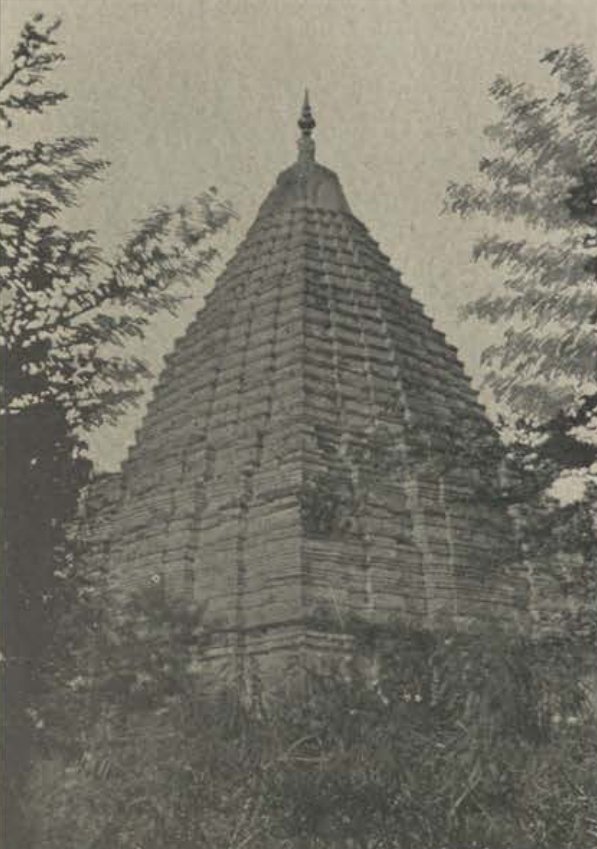
A temple at Vemulavada, photographed before 1898. Campbell gives only "Temple at Yemulwada", so which of the temples it shows is not known.
Photo: unknown photographer, Glimpses of the Nizam's Dominions (A. Claude Campbell), 1898, p. 474 · Public domain
Photographed before 1898
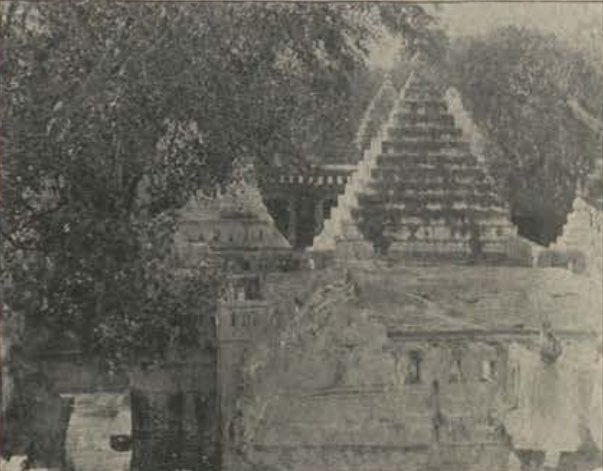
A group of temples at Vemulavada, photographed before 1898. Campbell gives only "Temple at Yemulwada".
Photo: unknown photographer, Glimpses of the Nizam's Dominions (A. Claude Campbell), 1898, p. 475 · Public domain
Also recorded as
- Vemulavada
- Vemulawada
- Vemalavada
- Yamalvada
- Yemulwada
- Lemulavada
- Lembulavataka
- Raja Rajeshwara temple
- Bhimeshwara temple
- Baddegesvara
- Nagareshwara
- Kedareshwara