Coins, weights and measures of the Kakatiyas
The Kakatiyas used small gold coins marked with the boar, their royal emblem. This page describes the coins and seals that survive, how scholars identified them, the coin names and values in the inscriptions, and the measures of grain and land.
What survives: coins and seals
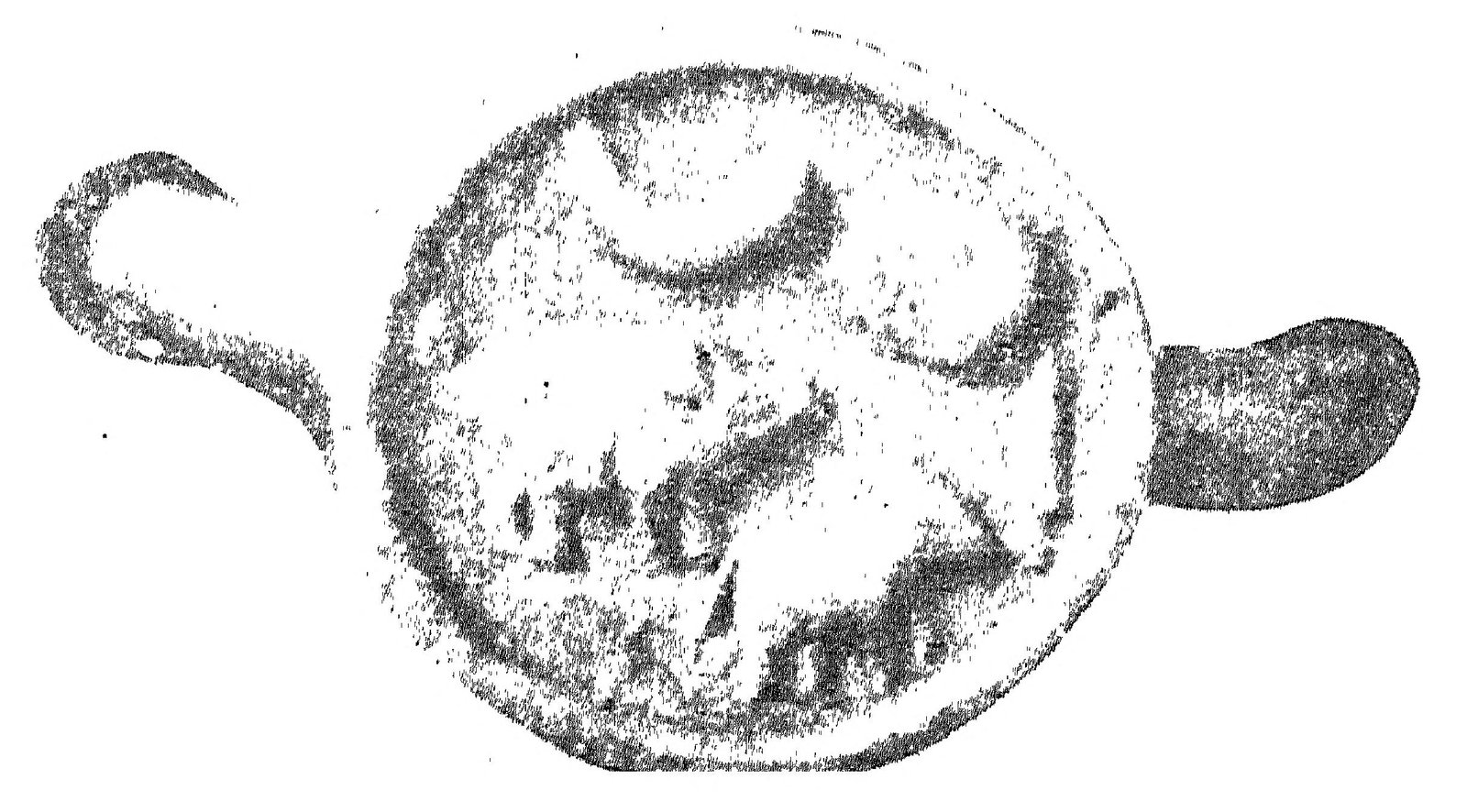
Plate from a published report
The seal of the Garavapadu copper plates, dated 12 April 1260 in the reign of Ganapati Deva. C. R. Krishnamacharlu described a crescent and a sun at the top, a boar with an upright dagger, and a cow below. The crescent is clear in the printed plate, but the boar and the cow are faint. The seal carries no legend.
Three kinds of evidence survive for Kakatiya money. The first kind is a group of small gold coins, and the coins that Parabrahma Sastry studied are in the State Museum at Hyderabad. The second kind is the seals attached to Kakatiya copper-plate grants. The third kind is the many inscriptions that name coins, weights and measures. The coins carry a royal title rather than a personal name.
Parabrahma Sastry 1975 (coins) · Parabrahma Sastry 1975, Kakatiya Coins and Measures, pp. 9-17 (coins and catalogue); Parabrahma Sastry 1975, pp. 11-14 and 18-19 (coin names and measures in inscriptions)
The boar, or varaha, was the royal emblem of the Kakatiyas. The Bayyaram tank inscription says that the descendants of Prola I placed the boar on their gold coins and on their cattle. Parabrahma Sastry holds that the Kakatiyas took the boar from their overlords, the Western Chalukyas. The seal of the Garavapadu plates of 12 April 1260 shows the crescent moon, the sun, a boar with an upright dagger, and a cow. C. R. Krishnamacharlu, who edited the plates, found no legend on this seal. The Kotagiri plates of 1273 have no separate seal. A boar in relief sits on the joint of the metal loop that holds those plates together.
Parabrahma Sastry 1975 (coins)Epigraphia Indica XVIIIKotagiri plates 1925 · Parabrahma Sastry 1975, p. 5 (Bayyaram verses 12-13, from Epigraphia Andhrica I, p. 88); Epigraphia Indica XVIII, pp. 346-348, and seal photograph on the plate after p. 348; Kotagiri plates 1925, opening description of the plates
The Khandavalli plates carry the only known Kakatiya seal with a legend. The seal shows the sun, the moon, a boar, a small cow and an upright sword, with the legend Dayagajakesari below them. The plates record gifts made in 1289 and 1292 by two nobles in the reign of Prataparudra. Parabrahma Sastry asked whether the seal belonged to the king or to a donor. The Terala inscription, set up on the same day as the second gift, gives Prataparudra the title Dayagajakesari. N. Ramesan, the general editor, admitted some doubt about the seal but accepted the Terala evidence.
Parabrahma Sastry 1975 (coins)Epigraphia Telanganica 2023 · Parabrahma Sastry 1975, pp. 3-5 and Plate II (seal); Parabrahma Sastry 1975, pp. 7-8 (Terala inscription of 1292); Parabrahma Sastry 1975, Introduction by N. Ramesan, dated 6 September 1975; Epigraphia Telanganica Vol. III, pp. 78-79 (Khandavalli plates)
How the coins were identified
Parabrahma Sastry then traced titles ending in kesari through Kakatiya inscriptions. Dayagajakesari means a lion to elephant-like enemies. The Bayyaram tank inscription gives Prola I the title Arigajakesari. The Bekkallu inscription of 1176 gives Rudra Deva the title Dayagajakesari. The Pakala inscription calls Ganapati Deva Rajagajakesari, and an inscription at Bidar calls both Ganapati Deva and Rudrama Devi Rayagajakesari. Sastry therefore suggested that Ganapati Deva or Rudrama Devi issued the Rayagajakesari coins. He suggested that Rudra Deva or Prataparudra issued the Dayagajakesari coins.
Parabrahma Sastry 1975 (coins)Parabrahma Sastry 1978 · Parabrahma Sastry 1975, pp. 4-7 and p. 9; Parabrahma Sastry 1978, The Kakatiyas of Warangal, pp. 259-262
Earlier scholars gave these coins to other rulers. Walter Elliot thought in 1886 that the Kakatiya emblem was a seated bull, which he had seen on several seals. In 1928 T. Streenivas of the Hyderabad Archaeological Department read the legends Raya Gaja Kesari and Daya Gaja Kesari on boar coins. Streenivas assigned these coins to subordinate chiefs of the Western Chalukyas. Khwaja Muhammad Ahmed in 1949 and M. Rama Rao in 1963 also assigned such coins to the Western Chalukyas.
Elliot 1886Nizam Archaeological Report 1925-26Parabrahma Sastry 1975 (coins) · Elliot 1886, Coins of Southern India, p. 85; Nizam Archaeological Report 1925-26 (published 1928), Appendix B, pp. 21-26; Parabrahma Sastry 1975, pp. 9-10
Design, weight and hoards
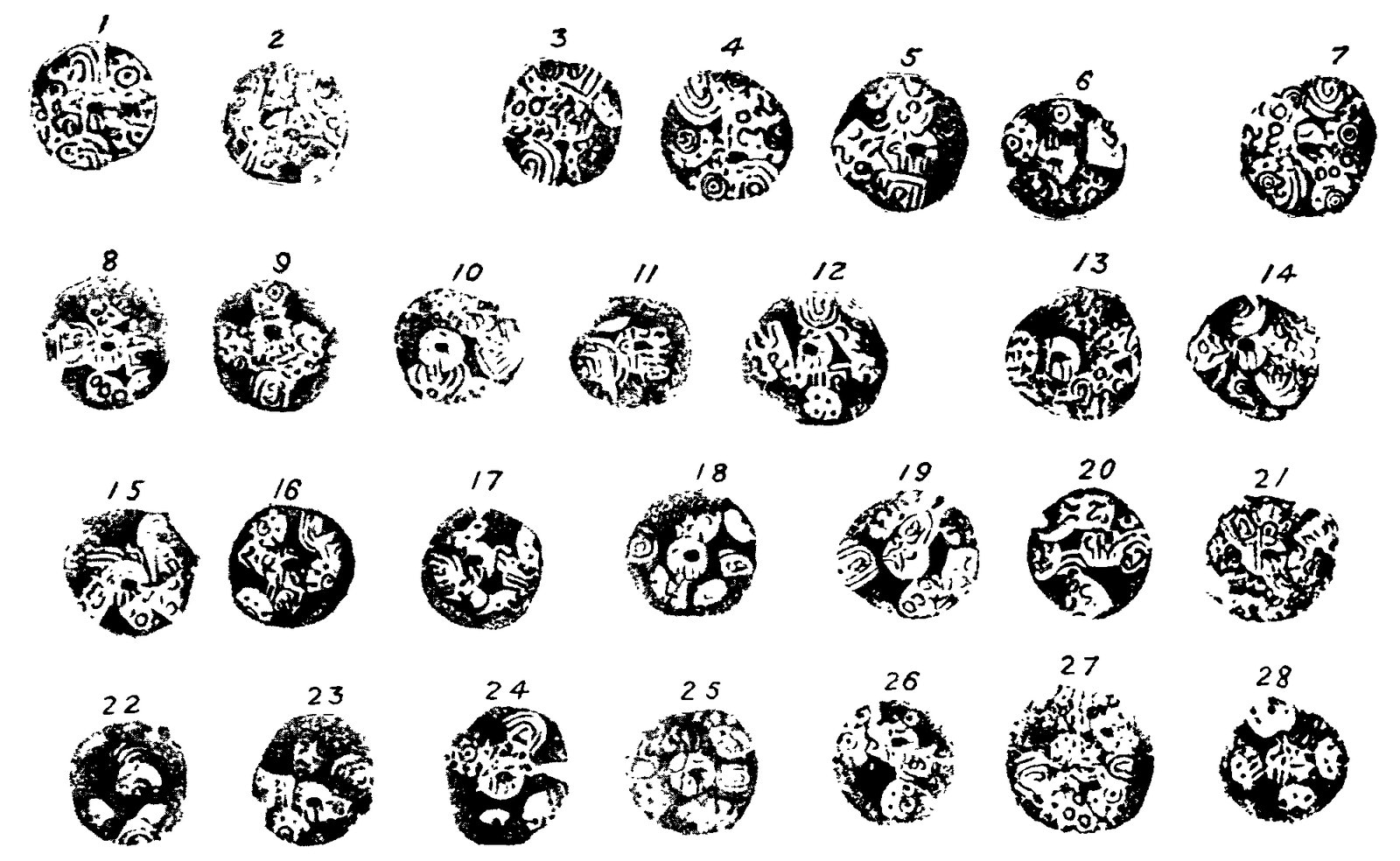
Plate from a published report
Twenty-eight boar coins from Plate XVIII of the Hyderabad Archaeological Department report for 1925-26. The coins are struck on one face only. T. Streenivas read the legend Raya Gaja Kesari on Nos. 3 to 7, and Daya Gaja Kesari on most other lettered coins. Nos. 1 and 2 are gold coins of 1920-21 with the legend Daya Gaja Kesari. Streenivas and R. Srinivasa Raghava Ayyangar assigned the coins to subordinate chiefs of the Western Chalukyas. Parabrahma Sastry later assigned coins of this type to the Kakatiyas.
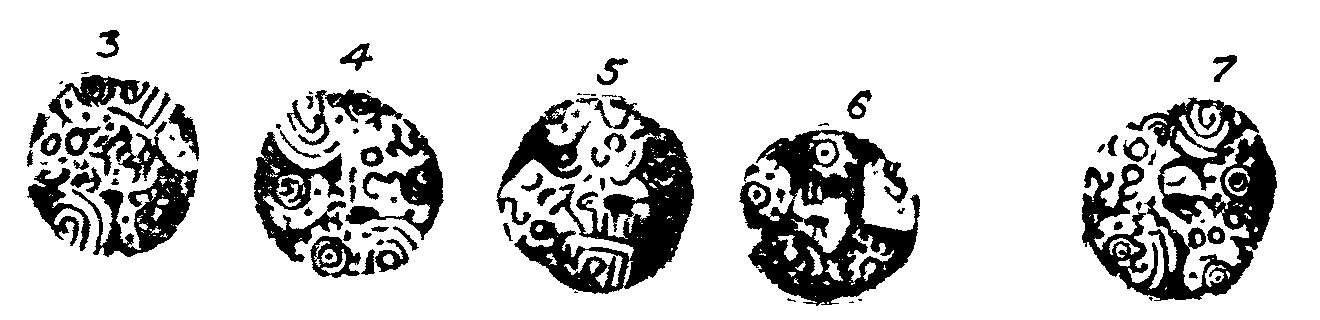
Plate from a published report
Five boar coins with the legend Raya Gaja Kesari, as read by T. Streenivas in 1928. Nos. 3 to 6 came from Rastiguda in Huzurnagar taluk, and No. 7 came from Rangpani in Jangaon taluk. Streenivas called No. 7 the best preserved coin of the find. Parabrahma Sastry assigned Rayagajakesari coins to Ganapati Deva or Rudrama Devi.
The coins are thin pieces of gold, struck on one face only. Parabrahma Sastry found that five punches made the design on the Suddala coins. One punch, struck four times, made four lotuses. A second punch made the boar, with the sun, a vertical stroke and the moon above it. Two punches made the two-line legend, and a fifth punch made the syllable Sri on opposite edges. Sastry read the legends as Telugu characters, although earlier writers had called the script Telugu-Kannada. Sastry could not decide whether the vertical stroke stood for the gadyana or for a sword.
Parabrahma Sastry 1975 (coins)Nizam Archaeological Report 1925-26 · Parabrahma Sastry 1975, pp. 9-12; Nizam Archaeological Report 1925-26, Appendix B, p. 21
The 52 coins of the Suddala hoard weigh between 53.3 and 55.2 grains, and most weigh 54 or 54.5 grains. A weight of 54 grains equals about 3.5 grams. The Tarigoppula coins weigh 3.69 to 3.78 grams, and the coins of a hoard of unknown origin weigh about 57 or 58 grains. Parabrahma Sastry calls the metal base gold, but he gives no measure of its purity. T. Streenivas described the 39 coins that he studied in 1928 as silver. Streenivas also reported 20 gold coins of the same type, found at Gulbarga and Muminabad in 1920-21, as 14 carats fine.
Parabrahma Sastry 1975 (coins)Nizam Archaeological Report 1925-26 · Parabrahma Sastry 1975, pp. 10-11 and catalogue, pp. 14-17; Nizam Archaeological Report 1925-26, Appendix B, pp. 21 and 26 (14 carats fine, citing the report for 1920-21, p. 23)
Parabrahma Sastry described four groups of these coins. The Narsapur hoard from Yellandu taluk in Khammam district held 53 Rayagajakesari coins, 4 Dayagajakesari coins and a pair of gold ear-pendants. The Suddala hoard from Sircilla taluk in Karimnagar district held 51 Dayagajakesari coins and one coin of better gold from another series. The Tarigoppula hoard from Jangaon taluk held 11 coins, and four of them read Rayagajakesari. A fourth hoard of 11 coins came from an unknown place in Telangana before 1930.
Parabrahma Sastry 1975 (coins) · Parabrahma Sastry 1975, pp. 9-11; Parabrahma Sastry 1975, catalogue, p. 17 (hoard acquired before 1930)
Other finds are recorded elsewhere. T. Streenivas listed 39 boar coins that reached Hyderabad in 1925-26, four from Rastiguda in Huzurnagar taluk and 35 from Rangpani in Jangaon taluk. B. Subrahmanyam catalogued a trove from Padmakshi Gutta at Hanamkonda in 2011. A newspaper review of D. Raja Reddy's book of 2023 reports a Padmakshi hoard of 567 gold coins. The review says that 272 of these coins carry the boar and the legend Ahitagajakesari.
Nizam Archaeological Report 1925-26Subrahmanyam 2011Hans India 2023 (review of Raja Reddy) · Nizam Archaeological Report 1925-26, Appendix B, p. 21; Subrahmanyam 2011 (publisher's description only); The Hans India, 9 April 2023
Coin names and values
Kakatiya inscriptions call the main gold coin the gadyana, also written gadya, or the mada. Sanskrit inscriptions call the same coin a nishka. Parabrahma Sastry showed that the three words meant the same coin. Two inscriptions at Kolluru, for example, give one sum as 5 nishkas in Sanskrit and 5 gadyas in Telugu. Many records add the prefix kesari, as in kesari-gadya and kesari-mada, for the Kakatiya standard. E. Hultzsch explained in 1914 that the abbreviation ga stands for gadyana.
Parabrahma Sastry 1975 (coins)Epigraphia Indica XIIEpigraphia Telanganica 2023 · Parabrahma Sastry 1975, pp. 11-12 and p. 18; Epigraphia Indica XII, Motupalli pillar inscription, footnote on the abbreviation ga; Epigraphia Telanganica Vol. II, No. 176 (Bhattiprolu, 1238, gift of kesari-gadyas)
Ten rukas made one gadyana or mada, and an inscription at Bollepalli in Nalgonda district states this rate directly. Parabrahma Sastry gives the adduga as half a ruka, the padika as a quarter and the visa as one sixteenth. Sastry calls several of these values tentative, and no Kakatiya ruka coin had been found when he wrote. The Motupalli pillar edict of Ganapati Deva, issued in 1244-45, fixes sea customs in rukas for each gadyana of value. Several records fix a levy of one visa on each mada or gadyana of sales.
Parabrahma Sastry 1975 (coins)Parabrahma Sastry 1978Epigraphia Indica XIIEpigraphia Telanganica 2023 · Parabrahma Sastry 1975, pp. 12-14; Parabrahma Sastry 1978, p. 255 (Motupalli rates); Epigraphia Indica XII, Motupalli pillar inscription; Epigraphia Telanganica Vol. II (a visa in every gadyana for a perpetual lamp)
Weights and measures
The Kakatiyas also gave the kesari name to their weights and measures, such as the kesari-tumu and the kesari-putti. Parabrahma Sastry notes that these royal standards first appear in coastal inscriptions in the time of Ganapati Deva. Four giddas made a sola, and doubling steps led through the tavva, manika, adda, kuncha and irasa to the tumu. Twenty tumus made one putti. Sastry admits that nobody can now state the actual capacity of these units.
Parabrahma Sastry 1975 (coins) · Parabrahma Sastry 1975, pp. 18-19
The tumu and the putti also measured land. Surveyors used rods called gadas, which measured 20 or 22 spans, or 10 or 11 cubits, in different regions. A stone at Penumuli in Guntur district, dated 1314, carries a marked line one cubit long. The inscription on the stone orders a rod of 8 cubits for house sites and a rod of 24 cubits for fields. Parabrahma Sastry cites M. Somasekhara Sarma for a rate of 112 and a half square gadas to one tumu of land.
Parabrahma Sastry 1975 (coins) · Parabrahma Sastry 1975, pp. 18-19 (Penumuli, SII X, No. 509, and M. S. Sarma, History of the Reddi Kingdoms, p. 365)
Cautions
Several cautions apply to these coins. Copper coins with the Nagari legend Kakatiya Prataparudra also name Kataka, or Cuttack. N. Venkataramanayya showed that they belong to the Gajapati king Prataparudra of Orissa. R. D. Banerji dated that Gajapati king to 1497-1541. Boar coins were not only Kakatiya, because V. Yashoda Devi records gold boar coins of the Kayastha chief Ambadeva. The Epigraphia Telanganica editors give the kesari titles to Prola II and Ganapati, which differs from Sastry.
Parabrahma Sastry 1975 (coins)Banerji 1930Yashoda Devi 1975Epigraphia Telanganica 2023 · Parabrahma Sastry 1975, Introduction and pp. 1-2, Plate I; Banerji 1930, History of Orissa I, p. 327; Yashoda Devi 1975, After the Kakatiyas, p. 8, note 20 (Indian Antiquary 56, p. 191); Epigraphia Telanganica Vol. III, p. 79